Industry Insights: How the AI & Electronics Revolution is Reshaping the Supply Chain and Driving Upstream Fiberglass Yarn Costs
Read More >>
How to go to Suntex?
Why is Suntex a reliable supplier?
Besides competitive prices, what else can Suntex provide?
What are Suntex's products?
Looking for any help?
I’ve always been fascinated by how industrial flame retardant fabrics work. These fabrics are carefully designed, adhering to uncompromising fire protection standards. Made from cutting-edge materials and treated with state-of-the-art chemical processes, they can endure the most severe fire threats.
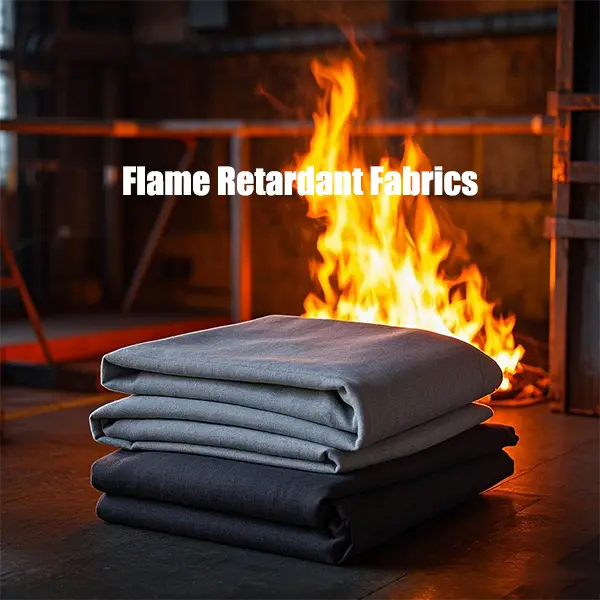
When it comes to fire prevention, these fabrics are highly resistant to ignition. Their ignition thresholds are significantly higher than those of ordinary fabrics. I once visited a busy welding workshop where sparks were flying everywhere. The industrial flame retardant fabrics used for welders’ protective clothing and workbench coverings were very unlikely to catch fire from accidental sparks. This is due to the complex materials and treatment processes in the fabric. They are formulated to dissipate heat rapidly, effectively preventing the fabric from reaching its ignition temperature. Some industrial flame retardant fabrics are made of inherently non-flammable fibers, such as certain ceramic or glass-based fibers. These fibers not only don’t support combustion but also won’t ignite even at extremely high temperatures.
However, I have to admit that no fabric can claim absolute immunity to fire under all conditions. When faced with large-scale industrial fires or long-term exposure to high-temperature flames, even the most advanced industrial flame retardant fabrics may start to degrade. Still, their ability to resist ignition much longer than ordinary fabrics remains a crucial advantage.
In terms of mitigating fire spread, industrial flame retardant fabrics prove to be highly effective. They are designed to slow down the spread of fire in industrial environments. In large industrial facilities, if a fire breaks out in one area, the flame retardant fabrics used in wall coverings, conveyor belts, and insulation materials can act as powerful barriers. These fabrics are designed to limit the transfer of heat from the burning area to the unburned area. For example, some industrial flame retardant conveyor belts are designed with a multi-layer structure. The inner layer emphasizes strength, while the outer layer is treated with flame retardants. This design helps prevent the rapid spread of fire along the conveyor belt, avoiding the possibility of a large fire engulfing the entire facility.
Moreover, many industrial flame retardant fabrics have self – extinguishing properties. Once the source of fire is removed, the fabric stops burning on its own. This remarkable property is achieved through the chemical reactions of the fabric when heated. The chemicals in the fabric may release substances that inhibit the combustion process, effectively extinguishing the flame.
Common types of industrial flame retardant fabrics include aramid-fiber-based fabrics, such as Nomex and Kevlar. These fibers are well-known for their strength and heat resistance and are also used in other high-risk applications. In the industrial field, they are used in protective equipment for workers in industries including oil and gas, foundries, and power plants. Additionally, there are specialized industrial fabrics made from inorganic materials like fiberglass. Fiberglass-based fabrics offer excellent fire resistance and are often used in insulation and fire protection applications.
Now, let’s take a detailed look at these industrial flame retardant fabrics.
| Industrial Retardant Fabric | Prevent Burning | Delay Burning |
| Fiberglass Fabric | Y | Y |
| Silicone Coated Fiberglass Fabric | N | Y |
| PU Coated Fiberglass Fabric | N | Y |
| PTFE Coated Fiberglass Fabric | N | Y |
| Aramid Fabric | N | Y |
| Ceramic Fabric | Y | Y |
Y for Yes. N for No.
I know that fiberglass fabric is made up of fine glass fibers. Due to its high melting point, fiberglass fabric has a high resistance to ignition. It doesn’t burn like traditional combustible fabrics. However, it can’t completely stop the transfer of heat. Instead, it acts as a thermal barrier, delaying the spread of heat to adjacent materials.
It’s important to note that when the temperature exceeds 550°C, the strength of fiberglass deteriorates. This means it’s not suitable for use in environments above 550°C. But within the temperature range of 550°C, fiberglass fabric can effectively exert its flame-retardant properties and is a qualified industrial flame retardant fabric. By reducing the rate of heat transfer, it can significantly delay the spread of fire to other areas, providing strong protection for fire safety in industrial environments.
Adding a silicone coating to the surface of fiberglass fabric can significantly enhance its flame-retardant performance. This coating is specially added with flame retardants, giving it excellent self – extinguishing properties. When encountering a flame attack, the silicone coating decomposes and forms a char layer. This char layer is like a solid insulator, effectively reducing the contact of oxygen and heat with the underlying fiberglass.
However, since silicone is an organic substance, when the silicone-coated fiberglass fabric comes into contact with a flame, the surface coating will be ignited. But under normal circumstances, the coating will extinguish automatically in a short time. Note that if the silicone coating is too thick, the flame won’t go out on its own. Some silicone-coated fiberglass fabrics with thinner coatings can meet the EN13501 – 1 A2 level flame-retardant standard, which allows them to effectively slow down the spread of the flame. Thus, this type of fabric can not only delay the spread of fire but also, to a large extent, prevent itself from catching fire, effectively playing a role in flame retardancy.
The PU (polyurethane)-coated fiberglass fabric skillfully combines the high strength of fiberglass with the excellent flame-retardant performance of the PU coating. This unique combination makes this fabric occupy an important position in the field of industrial flame retardancy. The carefully formulated PU coating is like a customized fire shield for fiberglass. Once it encounters a fire threat, it will react quickly. When the flame approaches, the PU coating will immediately expand and quickly form a foam-like char layer. This char layer is like a highly efficient heat-insulating protective suit for fiberglass, effectively isolating the external high temperature and oxygen, thus greatly slowing down the combustion process.
It’s worth noting that both PU coated fiberglass fabric and silicone-coated fiberglass fabric use organic coatings. However, there are significant differences in their coating characteristics. Usually, the coating content of PU-coated fiberglass fabric is relatively low, roughly between 30gsm and 50gsm. The thinner coating enables the PU coated fiberglass fabric to trigger and exert its flame-retardant mechanism more quickly when facing a flame. Compared with silicone-coated fiberglass fabric, PU coated fiberglass fabric shows more excellent flame-retardant performance.
Most PU-coated fiberglass fabrics can meet the EN13501-1 A2 level, which fully proves that they have reached a relatively high level in terms of flame-retardant performance. Although it can’t completely prevent combustion, it can significantly delay the spread of fire. At the critical moment of a fire, it can buy extremely valuable time for fire-fighting operations and personnel evacuation, providing strong protection for fire safety in industrial places.
The PTFE (polytetrafluoroethylene) fiberglass fabric is highly regarded for its excellent high-temperature stability and chemical resistance. Although PTFE is essentially a plastic and can withstand high temperatures of up to 300°C, it is still flammable when faced with high-temperature flames. When a fire occurs, the PTFE coating can form a barrier to some extent, but it’s not completely impenetrable.
The PTFE – fiberglass fabric only meets the EN13501 – 1 B level flame-retardant standard. Compared with silicone-coated fiberglass fabric or PU coated fiberglass fabric, its flame-retardant degree is relatively low. In terms of heat transfer, although it can delay the spread of fire by reducing heat transfer, the effect is not as good as the previous two. However, it’s worth mentioning that PTFE doesn’t produce toxic smoke during the combustion process. This characteristic makes it still have certain application value in environments where strict control of smoke toxicity is required. But overall, in terms of the ability to prevent combustion, it lags behind some other high-performance flame-retardant fabrics.
Aramid fabrics, such as the well-known Kevlar, shine brightly in the industrial field with their high strength and excellent flame-retardant characteristics. The unique molecular structure of aramid fibers endows it with excellent heat resistance. When encountering a fire attack, aramid fabric will quickly decompose and form a protective char layer. This char layer is like a solid shield, effectively insulating the underlying fibers and powerfully preventing further combustion. Therefore, aramid fabric can significantly delay the spread of fire, but it can’t prevent combustion.
However, it’s clear that aramid fabric is essentially a chemical fiber fabric. From the perspective of fire-prevention and combustion-assisting performance, it is inherently inferior to fiberglass fabric made of inorganic materials like glass fibers. Fiberglass fabric, with its inorganic characteristics, has unique advantages in high-temperature resistance and fire prevention. Nevertheless, aramid fiber fabric is still highly favored, mainly because it has soft and skin-friendly qualities and also has certain flame-retardant properties. This makes aramid fiber fabric show irreplaceable value in some application scenarios where high requirements are placed on the hand feel and wearing comfort of the fabric, while also requiring a certain fire-prevention ability.
Ceramic fiber fabric is made from ceramic-based materials and usually contains ceramic fiber components. These fibers have extremely high melting points, endowing the fabric with excellent high-temperature resistance. When encountering a fire, ceramic fiber fabric doesn’t burn but remains stable in a high-temperature environment. It’s like a strong heat-insulating fortress, effectively preventing the transfer of heat to nearby materials. It can not only greatly delay the spread of fire but also powerfully prevent adjacent combustible materials from being ignited. With its excellent characteristic of maintaining structural integrity under extremely high temperatures, ceramic fiber fabric has become a reliable choice in application scenarios with extremely strict fire-prevention requirements, such as high-temperature industrial processes or fire-prevention barriers in buildings.
However, it should be noted that ceramic fibers are short fibers. This characteristic makes the ceramic fiber fabric made from them have obvious deficiencies in strength. Moreover, when the human body comes into contact with ceramic fiber fabric, it will produce a strong itchy feeling. Considering these characteristics, ceramic fiber fabric is more often used as a filler for thermal insulation and fire-prevention materials in practical applications. In the thermal insulation and fire-prevention material system, it can fully exert its excellent fire-prevention and heat-insulation performance while avoiding the problems brought about by lack of strength and poor touch, providing reliable fire – protection for various facilities.
In conclusion, industrial flame-retardant fabrics have a variety of flame-retardant properties. Some fabrics, like fiberglass fabric and ceramic fiber fabric, can almost prevent combustion, while others, such as fiberglass-based fabrics with various coatings, focus more on delaying the spread of fire. However, they all play an important role in industrial environments by preventing ignition or buying precious time in case of fire emergencies.
Other FAQ / Blogs / News >>