Industry Insights: How the AI & Electronics Revolution is Reshaping the Supply Chain and Driving Upstream Fiberglass Yarn Costs
Read More >>
How to go to Suntex?
Why is Suntex a reliable supplier?
Besides competitive prices, what else can Suntex provide?
What are Suntex's products?
Looking for any help?
An industrial insulation cover is a protective enclosure designed to reduce heat transfer between industrial equipment or pipes and their surroundings. By minimizing heat loss or gain, these covers help maintain the desired temperature of the equipment, improve energy efficiency, and enhance operational safety. They act as a thermal barrier, preventing heat from escaping in cold environments or entering in hot ones.
Industrial insulation covers find extensive use in various industries. In the power generation sector, they are applied to steam pipes, boilers, and turbines to prevent heat dissipation, thus improving the overall efficiency of power plants. In the chemical industry, they are used in reactors, storage tanks, and pipelines to ensure the proper temperature for chemical reactions and prevent product degradation. Additionally, in the oil and gas industry, insulation covers are employed on pipelines and processing equipment to maintain the temperature of fluids during transportation and refining processes.
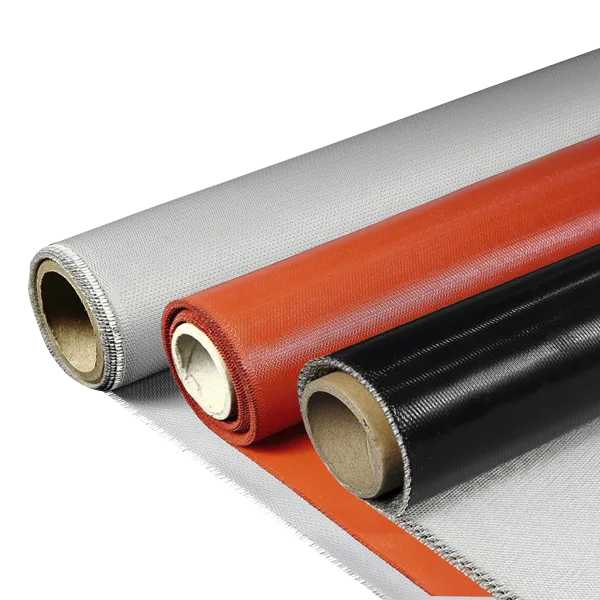
Silicone coated fiberglass cloth, silica fabric, and fiberglass needle mat are the top three materials for industrial insulation covers. Silicone coated fiberglass offers durability and weather resistance, silica fabric provides high-temperature tolerance, and fiberglass needle mat delivers excellent thermal insulation and sound absorption.

Silicone-coated fiberglass fabric is highly regarded for industrial insulation covers due to its outstanding temperature resistance, ranging from -70°C to 250°C (-94°F to 482°F). This makes it suitable for high-temperature environments like those found in manufacturing plants and power stations, ensuring the fabric maintains its integrity and performance even under challenging thermal conditions.
Additionally, the silicone coating enhances the fabric’s durability and flexibility. It provides resistance to abrasion and wear, ensuring longevity in demanding settings. The material remains flexible across a wide temperature range, facilitating easy installation and handling. This makes it ideal for applications such as pipe insulation covers and valve insulation covers, where precise fitting and adaptability are crucial.
Moreover, silicone-coated fiberglass fabric offers excellent chemical and water resistance. It withstands exposure to chemicals, oils, and UV radiation, making it suitable for tough industrial environments. The water-repellent nature of the silicone coating protects the insulation from moisture, while its thermal insulation properties effectively reduce heat transfer. This improves energy efficiency in applications like tank insulation covers and exhaust insulation wraps, ensuring optimal performance and safety.
The fabric is anti-fray, meaning it resists unraveling and maintains its structural integrity even when cut, which is essential for custom-fitting applications.
In terms of fire safety, the fabric has a very low contribution to combustion, low calorific value, and is difficult to ignite. It does not propagate flames or sustain burning, produces minimal smoke, and has no flaming droplets during combustion. It meets the EN13501-1 A2 standard.
This versatile material can be used in various settings, including ships, factories, refineries, and power plants. Its adaptability and robust performance make it an excellent choice for environments where high performance and durability are essential.
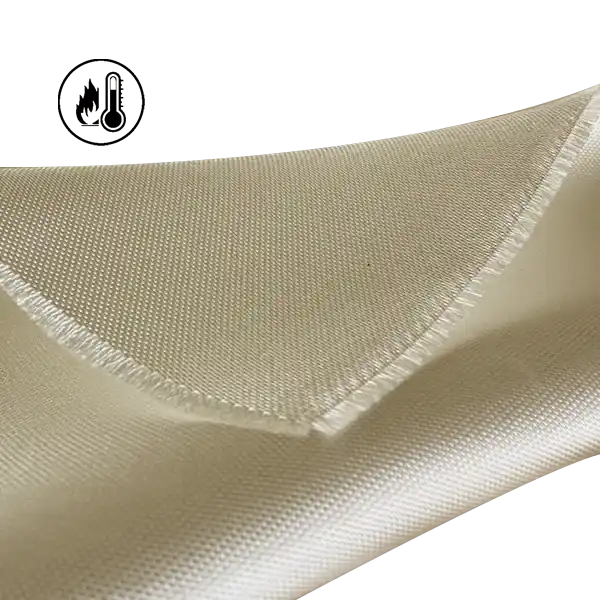
Silica fabric is renowned for its exceptional high-temperature resistance, making it ideal for industrial insulation covers. It can withstand temperatures up to 1000°C (1832°F), which is crucial for environments with extreme heat, such as power plants and refineries. This capability ensures that the insulation remains effective and maintains its structural integrity even under prolonged exposure to high temperatures.
Another significant advantage of silica fabric is its low thermal conductivity. This property allows it to provide excellent thermal insulation, minimizing heat transfer and improving energy efficiency. By reducing energy loss, it helps industries lower their operational costs and maintain consistent temperature control, which is essential for both safety and performance.
Silica fabric also excels in chemical resistance, standing up to most chemicals, acids, and alkalis. This resistance ensures durability and longevity in harsh industrial environments where exposure to corrosive substances is common. As a result, silica fabric maintains its protective qualities over time, reducing the need for frequent replacements or repairs.
In terms of fire resistance, silica fabric offers outstanding performance. It meets the EN13501-1 A1 level, indicating its non-combustibility and minimal smoke production. This enhances safety in the workplace, especially in industries where fire hazards are a concern, providing peace of mind and compliance with stringent safety regulations.
Lastly, silica fabric is both durable and flexible. It resists abrasion and wear, ensuring it can withstand the rigors of industrial use. Despite its strength, the fabric remains flexible, allowing for easy installation and handling. This combination of durability and flexibility makes it suitable for a wide range of applications, from pipe insulation to protective covers, across various industries.
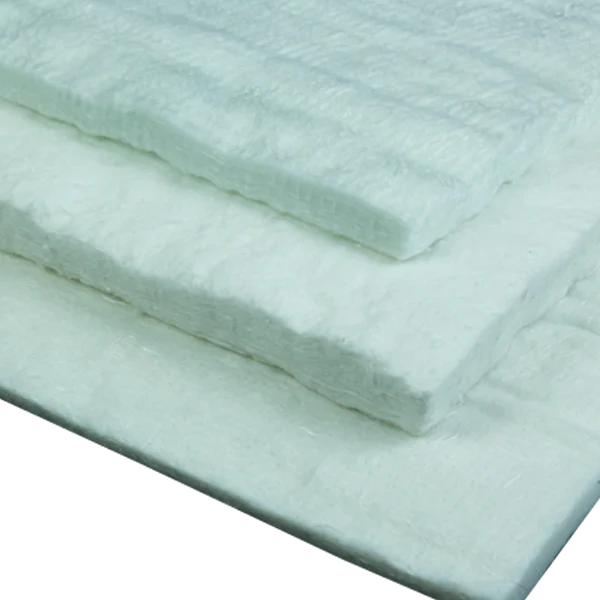
Fiberglass needle mat is considered one of the best materials for industrial insulation covers due to its high temperature resistance. It can withstand extreme heat, making it ideal for environments like power plants and refineries. This ensures the material maintains its integrity and insulation properties even under challenging conditions.
The mat’s structure provides excellent thermal insulation, with a low thermal conductivity typically ranging from 0.035 to 0.045 W/m\cdotpK. This effectively minimizes heat transfer, improving energy efficiency and helping maintain stable temperatures, which in turn reduces operational costs.
Additionally, fiberglass needle mat is both durable and flexible. It resists wear and tear while being easy to handle and install, making it suitable for various applications, including complex shapes and surfaces.
The material also boasts strong chemical resistance, standing up to many chemicals, acids, and alkalis. This ensures long-lasting performance in harsh industrial environments, reducing the frequency of replacements and maintenance.
Furthermore, fiberglass needle mat offers sound absorption properties, helping to reduce noise levels in industrial settings. This contributes to enhanced workplace safety and comfort.
These attributes make fiberglass needle mat a versatile and reliable choice for industrial insulation needs.
In addition to the top 3 materials, there are alternatives that can serve as substitutes to meet different usage needs and working environments. Below, we will provide a detailed explanation and comparative analysis.
There are some materials that can substitute for silicone coated fiberglass fabric in different use cases for making insulation covers, namely PTFE coated fiberglass fabric and PU coated fiberglass fabric.
PTFE-coated fiberglass fabric, with a polytetrafluoroethylene (PTFE) coating on a fiberglass base, provides numerous advantages for industrial insulation covers.
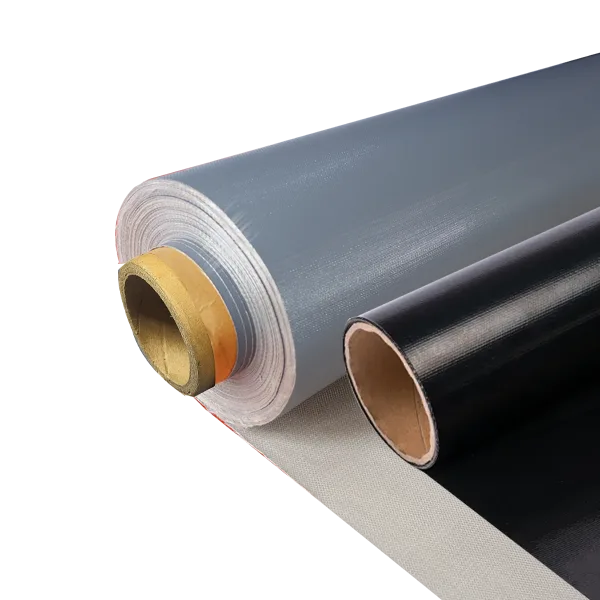
One of its key benefits is exceptional chemical resistance. PTFE’s inertness makes it ideal for environments with exposure to corrosive substances, such as chemical processing plants, where it can insulate pipes and equipment without degrading.
The fabric’s low friction coefficient imparts non-stick properties, useful in applications where materials need to slide smoothly. In the food processing industry, it helps prevent food from sticking to conveyor belts or baking trays, reducing cleaning requirements.
PTFE-coated fiberglass fabric can withstand continuous temperatures up to 280°C (536°F), making it suitable for high-temperature applications. This often exceeds the limits of silicone-coated fiberglass cloth, although silicone options may offer greater flexibility for certain uses.
However, PTFE fiberglass fabric’s fire resistance is generally not as strong as that of silicone-coated fiberglass fabric. Silicone coatings provide superior flame retardancy because they can form a protective char layer when exposed to high heat, which helps insulate and protect the underlying materials. This makes silicone-coated fabrics more suitable for applications where enhanced fire resistance is crucial.
Overall, PTFE fiberglass fabric remains an excellent choice for industrial insulation due to its durability, chemical resistance, and high-temperature performance, while silicone-coated options may be preferred for their superior fire-retardant properties.

Polyurethane (PU) coated fiberglass fabric is a popular choice for industrial insulation covers due to its notable advantages. It offers excellent abrasion resistance, forming a durable layer that withstands mechanical wear, making it ideal for environments with constant movement or friction. Its flexibility allows it to easily bend or wrap around irregularly shaped objects, which is advantageous for insulating complex-shaped pipes or machinery parts. Additionally, PU-coated fiberglass fabric is often more cost-effective than silicone and PTFE-coated options, appealing to budget-conscious applications. It is suitable for use in environments where temperatures do not exceed 302-392°F, making it a practical choice for general-purpose industrial insulation tasks.
However, there are some disadvantages when compared to silicone and PTFE-coated fabrics. PU-coated fabric has a lower temperature resistance, as silicone can withstand temperatures up to 500°F, and PTFE can handle even more extreme conditions. In terms of chemical resistance, PTFE-coated fabrics outperform PU, making PTFE preferable in environments with exposure to harsh chemicals. Additionally, silicone and PTFE coatings generally provide better durability in extreme environmental conditions, such as high humidity or UV exposure, where PU may degrade more quickly. Therefore, while PU-coated fiberglass is versatile and affordable, silicone or PTFE-coated fabrics might be more suitable for applications requiring higher temperature resistance or greater chemical durability.
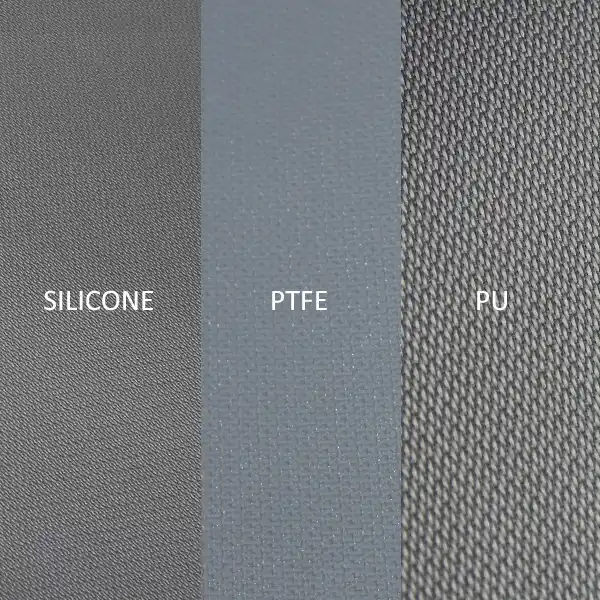
① Performance Comparison
② Application – based Analysis of Advantages and Disadvantages
| Property/Application | |||
|---|---|---|---|
| Heat Resistance | Wide range: -70°C to 260°C | Up to 280°C continuous use | Suitable for temperatures up to 150-200°C |
| Chemical Stability | Good resistance; may degrade with strong oxidizers | Excellent stability; resistant to almost all chemicals | Limited; suitable for mild environments, degrades in strong acids/alkalis |
| Mechanical Properties | Flexible and strong with good tensile strength | Less flexible but excellent dimensional stability | Very flexible, better abrasion resistance than silicone and PTFE |
| Electronics Industry | Preferred for high-voltage insulation due to heat and electrical insulation properties | Used in precision devices for chemical stability and low friction | Less common due to lower heat resistance and electrical insulation |
| Food-Processing Industry | Suitable for applications requiring heat resistance like food ovens | Ideal for conveyor belts and baking equipment due to non-stick properties | Not recommended due to potential chemical leaching and limited stability |
| Industrial Manufacturing | Popular for insulating high-temperature equipment like boilers | Used in chemical processing equipment for its chemical resistance | Useful for parts subject to movement or vibration due to flexibility and abrasion resistance |
Similarly, there are materials that can substitute for silica fabric in making industrial insulation covers. These include heat treated fiberglass cloth, PU coated fiberglass fabric with stainless steel wire reinforcement, and high temperature finished texturized fiberglass fabric with stainless steel wire reinforcement.
Heat treated fiberglass fabric undergoes a specific high-temperature processing step that modifies its internal structure, significantly enhancing its heat resistance. It can typically withstand temperatures up to 450-600°C (842-1112°F), which is lower than the extremely high-temperature resistance of silica fabric (often exceeding 1000°C). However, in applications where the temperature does not reach such extreme levels, heat treated fiberglass fabric can be a more cost-effective alternative.
In terms of dimensional stability, heat treated fiberglass fabric is quite stable. The high-temperature treatment reduces the fabric’s tendency to shrink or expand under normal temperature fluctuations. This makes it suitable for applications where precise dimensions are required, such as in the insulation of small-scale industrial components.
Compared to silica fabric, heat treated fiberglass fabric has relatively lower chemical resistance. While silica fabric can resist a wide range of strong chemicals, heat treated fiberglass fabric may be more vulnerable to certain corrosive substances. But in general industrial environments with milder chemical exposures, it can still maintain its integrity and insulation performance well. For example, in some light manufacturing industries where the chemical environment is not highly corrosive, heat treated fiberglass fabric can be used for equipment insulation.
Additionally, after heat treatment, the material exhibits low smoke characteristics and reduced surface fiber fuzz, enhancing its safety and practicality in various industrial applications.
The addition of stainless steel (S.S.) wire reinforcement to PU coated fiberglass fabric imparts it with remarkable strength and tear – resistance. The stainless steel wires provide additional reinforcement, making the fabric suitable for applications where mechanical stress is a concern. For instance, in industrial settings where the insulation cover may be subject to physical impacts or pulling forces, such as in the insulation of large diameter pipelines that may experience movement during operation, this fabric can better withstand the stress without being damaged.
The PU coating on the fiberglass fabric offers good abrasion resistance, protecting the underlying fiberglass from wear and tear. It also provides some level of water – resistance, which is beneficial in damp or wet environments. This makes it a great choice for applications in outdoor industrial equipment or in areas with high humidity.
However, when compared to silica fabric, its heat resistance is lower. While silica fabric can endure extremely high temperatures, PU coated fiberglass fabric with S.S. wire reinforced is typically suitable for applications with temperature limits of around 150 – 600°C(302-1112°F). But its strength and durability in mechanical stress-prone environments give it an edge over silica fabric in those specific scenarios.
High temperature finished texturized fiberglass fabric with S.S. wire reinforced is designed to handle high temperature applications while maintaining high strength. It can withstand temperatures in the range of 650 – 750°C, which is still lower than the heat – resistance of silica fabric but higher than many other alternative materials. This makes it suitable for use in industrial processes where the temperature is high but not as extreme as those in some aerospace or high temperature furnace applications that require silica fabric. For example, gas turbines’ insulation covers.
The texturized structure of the fiberglass provides enhanced flexibility, allowing the fabric to be easily shaped around complex shaped equipment. The addition of stainless steel wire reinforcement further increases its tensile strength and resistance to tearing. In applications such as insulating large scale industrial turbines or high temperature pipes in power plants, its combination of high temperature resistance and mechanical strength makes it a viable option.
Compared to silica fabric, it has a relatively lower chemical stability. Silica fabric’s resistance to a wide variety of chemicals, including strong acids and alkalis, is more superior. But in applications where the chemical environment is not highly corrosive and high – temperature and mechanical strength are the main concerns, high temperature finished texturized fiberglass fabric with S.S. wire reinforced can be a more practical choice due to its relatively lower cost and better workability in some cases.
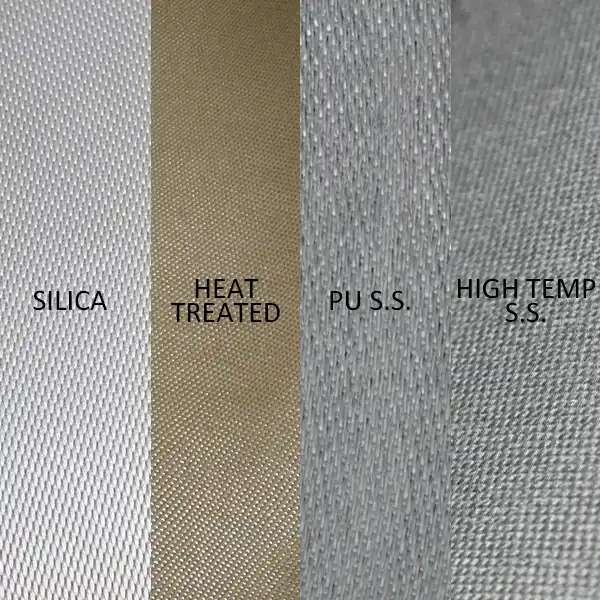
Silica fabric has the highest heat resistance among these materials, often capable of withstanding temperatures exceeding 1000°C. This makes it ideal for applications in extremely high temperature environments, such as in high temperature furnaces for metal smelting or in aerospace applications during re-entry into the Earth’s atmosphere.
Heat treated fiberglass fabric can withstand temperatures up to 450 – 600°C. It is suitable for industrial processes where the temperature is high but not as extreme as those requiring silica fabric. For example, in some heat-treatment ovens in the manufacturing industry, heat treated fiberglass fabric can be used for insulation.
PU coated fiberglass fabric with S.S. wire reinforced has a better performance in Strong vibration, thermal shock and others. Stainless steel improves the strength of fabric and make it stronger. Its temperature range is 180- 600°C
High temperature finished texturized fiberglass fabric with S.S. wire reinforced can handle temperatures in the range of 500 – 600°C. It can be used in applications such as insulating high temperature pipes in power plants, where the temperature is high enough to require a more heat resistant material than PU coated fiberglass fabric with S.S. wire reinforced but not as high as that of silica fabric.
① Mechanical Properties
In terms of strength, PU coated fiberglass fabric with S.S. wire reinforced and high temperature finished texturized fiberglass fabric with S.S. wire reinforced have an advantage due to the addition of stainless steel wire reinforcement. The stainless steel wires significantly increase their tensile strength and resistance to tearing, making them suitable for applications where mechanical stress is present. For example, in the insulation of large diameter pipelines that may experience movement or vibration during operation, these two materials can better maintain their integrity.
Silica fabric, although highly heat resistant, may be relatively brittle in some cases and has a lower tensile strength compared to the wire reinforced materials when it comes to withstanding mechanical stress. Heat treated fiberglass fabric has good dimensional stability but may not be as strong as the wire reinforced fabrics in terms of withstanding pulling or tearing forces.
② Chemical Resistance
Silica fabric is highly chemically stable and can resist a wide range of strong chemicals, including strong acids and alkalis. This makes it suitable for use in chemical plants where it may come into contact with various corrosive substances.
Heat treated fiberglass fabric has a relatively lower chemical resistance compared to silica fabric. While it can withstand some common industrial chemicals, it may be more vulnerable to certain corrosive substances over time.
PU coated fiberglass fabric with S.S. wire reinforced has limited chemical resistance mainly due to the PU coating. It can resist common moisture and some mild chemical environments but may degrade when exposed to strong acids or alkalis.
High temperature finished texturized fiberglass fabric with S.S. wire reinforced also has a relatively lower chemical stability compared to silica fabric, although it can maintain its integrity in non – highly corrosive environments.
③ Cost effectiveness
Heat treated fiberglass fabric is also most cost effective when compared to silica fabric and high temperature finished texturized fiberglass fabric with S.S. wire reinforced, especially for applications where the temperature range is within its capabilities.
PU coated fiberglass fabric with S.S. wire reinforced is often the relativity cost – effective among these materials, especially for applications where the temperature requirements are not high and mechanical strength is a concern. This makes it a popular choice for general purpose industrial insulation in many cases.
Silica fabric and high temperature finished texturized fiberglass fabric with S.S. wire reinforced are generally more expensive due to their specialized properties, such as high temperature resistance and high strength reinforcement. They are more suitable for applications where their unique properties are essential and the cost is a secondary consideration.
| Property | Silica Fabric | Heat Treated Fiberglass Fabric | PU Coated S.S. Fiberglass Fabric | High Temp Texturized S.S. Fiberglass Fabric |
|---|---|---|---|---|
| Temperature Resistance | Exceeds 1000°C (Extreme heat) | 100–600°C ( normal heat) | 180–600°C (Thermal shock/vibration environments) | 600–750°C (High-temp pipes, power plants, gas turbine) |
| Mechanical Strength | Low tensile strength, brittle | Moderate strength, good dimensional stability | (stainless steel wire reinforced) Resists tearing | (stainless steel wire reinforced) Resists tearing |
| Chemical Resistance | Excellent (Resists acids, alkalis, harsh chemicals) | Moderate | Limited (PU coating degrades in strong acids/alkalis) | Moderate (Suitable for non-corrosive environments) |
| Cost-Effectiveness | Expensive (Specialized high-heat applications) | Most cost-effective (Mid-range temperature needs) | Cost-effective (low to mid temps + mechanical stress) | Expensive (High-temp + mechanical stress) |
| Applications | Aerospace, metal smelting furnaces, extreme heat zones | Heat-treatment ovens, industrial insulation | Insulation with vibration/thermal shock (e.g., pipelines, machinery) | High-temp pipelines, power plants, gas turbine, heavy industrial use |
In addition to fiberglass needled mats, other materials suitable for making industrial insulation covers include silica needled mats and ceramic blankets.
Silica needle mat is a high-performance insulation material known for its distinct characteristics. It is created by needling silica fibers into a mat-like structure. One of its most notable features is its extremely low thermal conductivity, typically around 0.035 W/m·K. This allows it to effectively block heat transfer, making it an excellent choice for applications where heat retention or prevention is crucial. For instance, in high-temperature industrial furnaces, silica needle mat can line the furnace walls, significantly reducing heat loss to the environment.
In terms of high-temperature resistance, silica needle mat can withstand temperatures well above 1000°C (1832°F), surpassing fiberglass needle mat, which typically has a maximum continuous-use temperature of 600-700°C (1112-1292°F). This makes silica needle mat more suitable for extremely high-temperature environments, such as aerospace applications during rocket launches or high-temperature metal smelting processes.
However, silica needle mat is generally more expensive than fiberglass needle mat. The production process, which involves high-temperature processing and purification of silica fibers, contributes to its higher cost. This cost factor may limit its use in applications where budget constraints are a major concern.
Ceramic blankets, also known as ceramic fiber blankets, are versatile insulation materials with excellent properties. Made from ceramic fibers like alumina and silica, they offer outstanding high-temperature resistance. Ceramic blankets are classified by their maximum operating temperatures: low-temperature (up to 900°C or 1652°F), standard-temperature (up to 1200°C or 2192°F), and high-temperature (1400-1600°C or 2552-2912°F). This wide range makes them suitable for various applications, from general industrial insulation to advanced aerospace and metallurgical uses.
One major advantage of ceramic blankets is their low thermal conductivity, typically ranging from 0.03 to 0.05 W/m·K at room temperature. This is crucial for effective heat insulation. In industrial settings, such as high-temperature pipelines in power plants or chemical plants, this property helps maintain the temperature of transported fluids and reduces energy consumption.
In addition to heat insulation, ceramic blankets offer excellent fire resistance. They are non-combustible and can effectively prevent the spread of fire, making them ideal for applications where fire safety is crucial, such as building insulation in high-fire-risk areas like industrial warehouses or high-rise buildings.
Compared to fiberglass needled mats, ceramic blankets often provide better flexibility. They can be easily bent and shaped to fit irregular objects, which is beneficial for applications requiring insulation covers to conform to complex geometries. However, ceramic blankets might have lower sound absorption compared to fiberglass needled mats, which are more effective at absorbing sound waves due to their porous structure.
Despite these advantages, ceramic blankets also have some disadvantages. They can be more expensive than other insulation materials, especially in high-temperature applications. Additionally, ceramic fibers can be hazardous to health, so appropriate safety measures are necessary during handling and installation. Overall, despite these drawbacks, ceramic blankets remain a preferred choice for industrial insulation applications requiring efficient heat and fire protection.
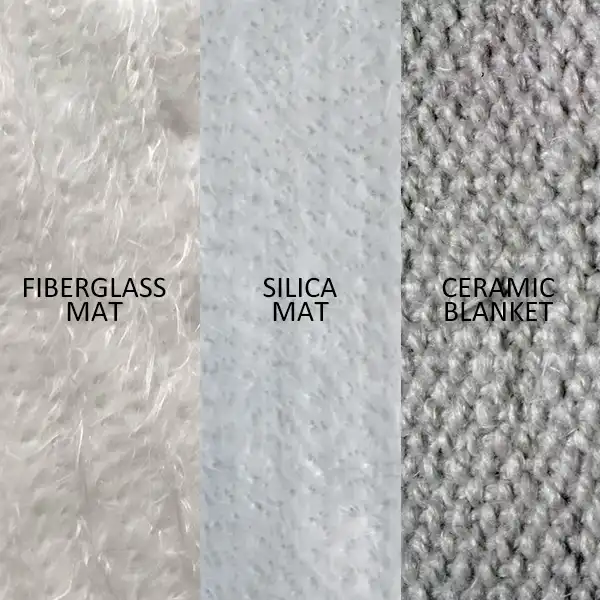
① Thermal Insulation Performance
② Temperature Resistance Range
③ Mechanical Strength
④ Selection Recommendations Based on Different Industrial Demands and Environments
| Property | Fiberglass Needle Mat | Silica Needle Mat | Ceramic Blanket b |
|---|---|---|---|
| Thermal Insulation Performance | – Good thermal insulation due to random fiber arrangement creating air pockets. – Limited heat resistance compared to others. – Suitable for general-purpose insulation in industrial and construction applications. | – Extremely low thermal conductivity, excellent for high-performance insulation. – Reduces heat loss in high-temperature applications | Very low thermal conductivity. – Wide temperature range: low-temperature (up to 900°C), standard (up to 1200°C), high-temperature (up to 1600°C). – Suitable for aerospace, metallurgical processes. |
| Temperature Resistance Range | – Maximum continuous-use temperature: 100-700°C. – Limited for extremely high-temperature environments. – Suitable for normal industrial and building applications. | – Can withstand temperatures above 1000°C. – Ideal for high-temperature applications (e.g., aerospace, metal-smelting). | – Wide range: low-temperature (up to 900°C), standard (up to 1200°C), high-temperature (1400-1600°C). – Versatile for various industrial processes. |
| Mechanical Strength | – Relatively good for general-purpose applications. – Can withstand normal handling and installation. – Less suitable for high-stress conditions. | – Relatively brittle due to silica fibers. – Lower tensile strength and resistance to bending/stretching compared to others. | – Good flexibility, can be bent and shaped to fit irregular objects. – Strength varies based on composition and manufacturing. |
| Selection Recommendations | – Cost-effective for general-purpose insulation in normal-temperature environments | – Best for extremely high-temperature processes | – Ideal for high-temperature resistance and insulating irregular-shaped objects |
Industrial insulation covers play a crucial role in various industries by enhancing energy efficiency and ensuring the safe operation of equipment. The choice of insulation material is of utmost importance as it directly impacts the performance and effectiveness of the insulation cover.
Silicone coated fiberglass cloth, silica fabric, and fiberglass needled mat are three top tier materials, each with its own set of unique properties. However, there are also numerous alternative materials available, such as PTFE coated fiberglass fabric, PU coated fiberglass fabric, heat treated fiberglass fabric, and more. Each of these materials has its own advantages and limitations in terms of heat resistance, chemical stability, mechanical properties, and cost effectiveness.
When choosing an insulation material for a specific application, it is essential to consider factors such as the operating temperature of the equipment, the chemical environment it will be exposed to, the mechanical stress it may endure, and the budget available. By carefully evaluating these factors and comparing the properties of different materials, industrial professionals can make an informed decision and select the most suitable insulation material. This will not only contribute to better energy conservation but also enhance the safety and reliability of industrial processes, ultimately leading to more efficient and sustainable industrial operations.
Other FAQ / Blogs / News >>