Industry Insights: How the AI & Electronics Revolution is Reshaping the Supply Chain and Driving Upstream Fiberglass Yarn Costs
Read More >>
How to go to Suntex?
Why is Suntex a reliable supplier?
Besides competitive prices, what else can Suntex provide?
What are Suntex's products?
Looking for any help?
In the world of industrial safety, fiberglass welding blankets play a crucial role in protecting both workers and equipment from the hazards associated with welding. As welding continues to be a key component in various industries, questions about the effectiveness, maintenance, and usage of these specialized blankets have surged. Whether you’re a seasoned professional or new to the welding scene, understanding the ins and outs of fiberglass welding blankets is essential for creating a secure work environment. In this article, we’ll answer the top 10 frequently asked questions about these protective tools, covering everything from material properties to care tips. Join us as we delve into this essential topic, ensuring that you’re informed and equipped to make the best choices for safety and efficiency in your welding projects.
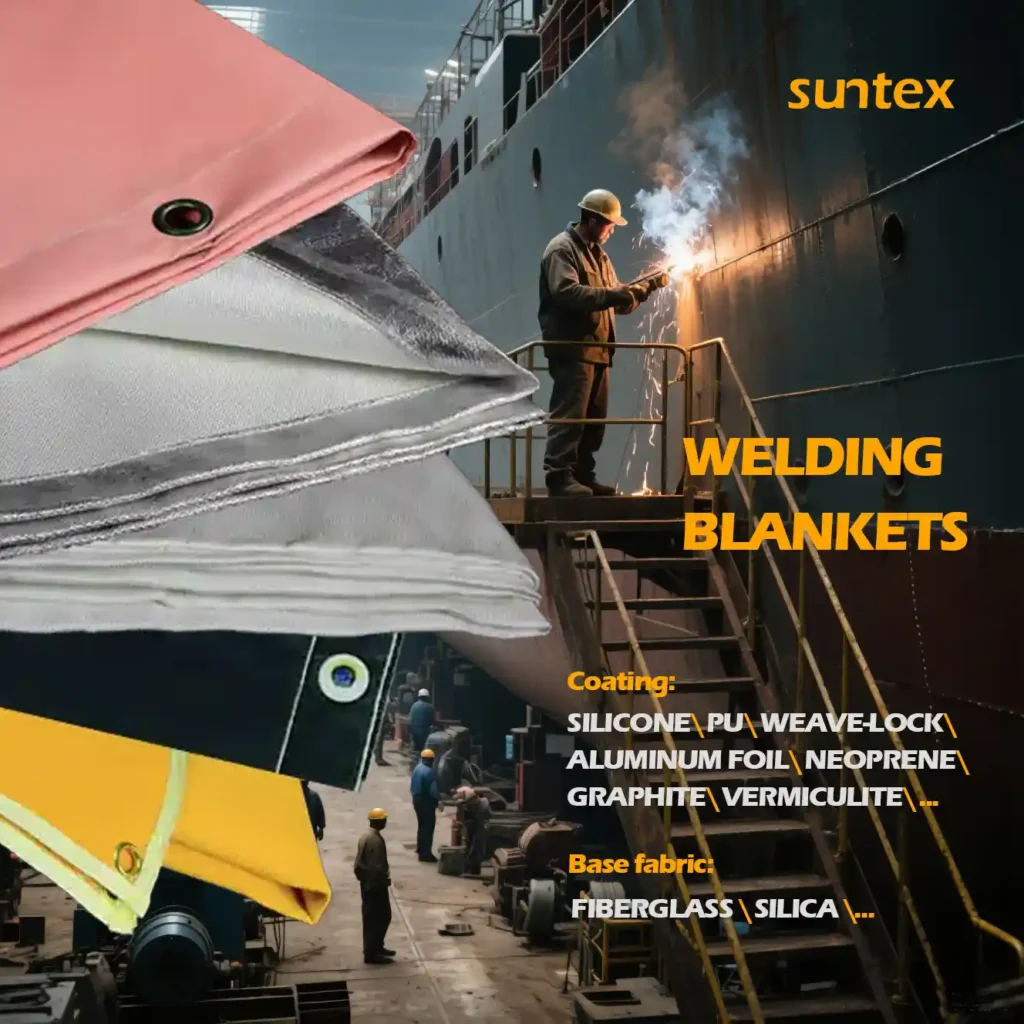
Fiberglass welding blankets are specialized safety products designed to shield workers, equipment, and the surrounding environment from intense heat, sparks, and spatter generated during welding processes. Primarily made from woven fiberglass material, these blankets offer exceptional high-temperature resistance, though they can also be constructed from silica fabric to meet varying industrial needs. This dual material composition expands their applicability across diverse high-heat scenarios, ensuring versatile protection in demanding work environments.
Their core function is to prevent fire hazards and protect surfaces from thermal damage. Fiberglass variants are typically formed by weaving fine glass fibers into a dense, durable fabric, often treated with heat-resistant coatings to enhance performance, enabling them to withstand temperatures up to 1000°F (537°C) or higher. Silica fabric-based blankets, alternatively, leverage silica’s inherent thermal stability to offer even greater heat resistance in extreme conditions, making them suitable for applications requiring superior fireproofing or higher-temperature tolerance(1,832°F / 1,000°C).
Both material types share key properties like high tensile strength, flexibility, and thermal insulation, but silica blankets may excel in specialized contexts such as foundries, metal smelting, or aerospace manufacturing. Beyond welding, these blankets are widely used in cutting, grinding, brazing, and other high-temperature operations across industries like automotive, construction, shipbuilding, and manufacturing. Understanding their composition—whether fiberglass or silica—highlights their adaptability and underscores their critical role in maintaining industrial safety standards.
One of the most notable features of fiberglass welding blankets is their exceptional heat resistance. The woven glass fibers can endure extreme temperatures without degrading or losing their protective properties. This makes them suitable for use in environments where temperatures can soar due to welding sparks, molten metal, or other high-heat activities. The blankets act as a barrier, preventing heat transfer and protecting both the worker and the surrounding area.
Another important feature of these blankets is their durability. The fiberglass material is inherently strong, with high tensile strength that resists tearing and abrasion. This durability ensures that the blankets can withstand the rigors of daily use in demanding industrial settings. Additionally, the blankets are often reinforced with grommets or sewn edges to enhance their longevity and make them easier to secure in place during use.
Flexibility is also a key characteristic of fiberglass welding blankets. Despite their robust construction, the blankets remain pliable, allowing them to be easily draped over irregular shapes and surfaces. This flexibility is crucial for providing comprehensive coverage and protection in various applications. The blankets can be folded, rolled, or cut to size, making them adaptable to different needs and situations.
The primary benefit of using fiberglass welding blankets is the enhanced safety they provide. By creating a barrier against heat and sparks, these blankets significantly reduce the risk of fires and burns. This protection is essential for maintaining a safe working environment and preventing accidents that could result in injury or damage to property. The peace of mind offered by these blankets allows workers to focus on their tasks without worrying about potential hazards.
Another advantage of fiberglass welding blankets is their cost-effectiveness. Investing in high-quality protective equipment can save money in the long run by preventing costly accidents and equipment damage. The durability and longevity of these blankets mean that they can be used repeatedly, providing reliable protection over time. This makes them a smart investment for any business that relies on welding and other high-heat processes.
In addition to safety and cost savings, fiberglass welding blankets also contribute to better work quality. By protecting the work area from heat and spatter, these blankets help maintain clean, damage-free surfaces. This is particularly important in industries where precision and quality are paramount. The use of welding blankets can lead to more consistent and professional results, enhancing the overall quality of the finished product.
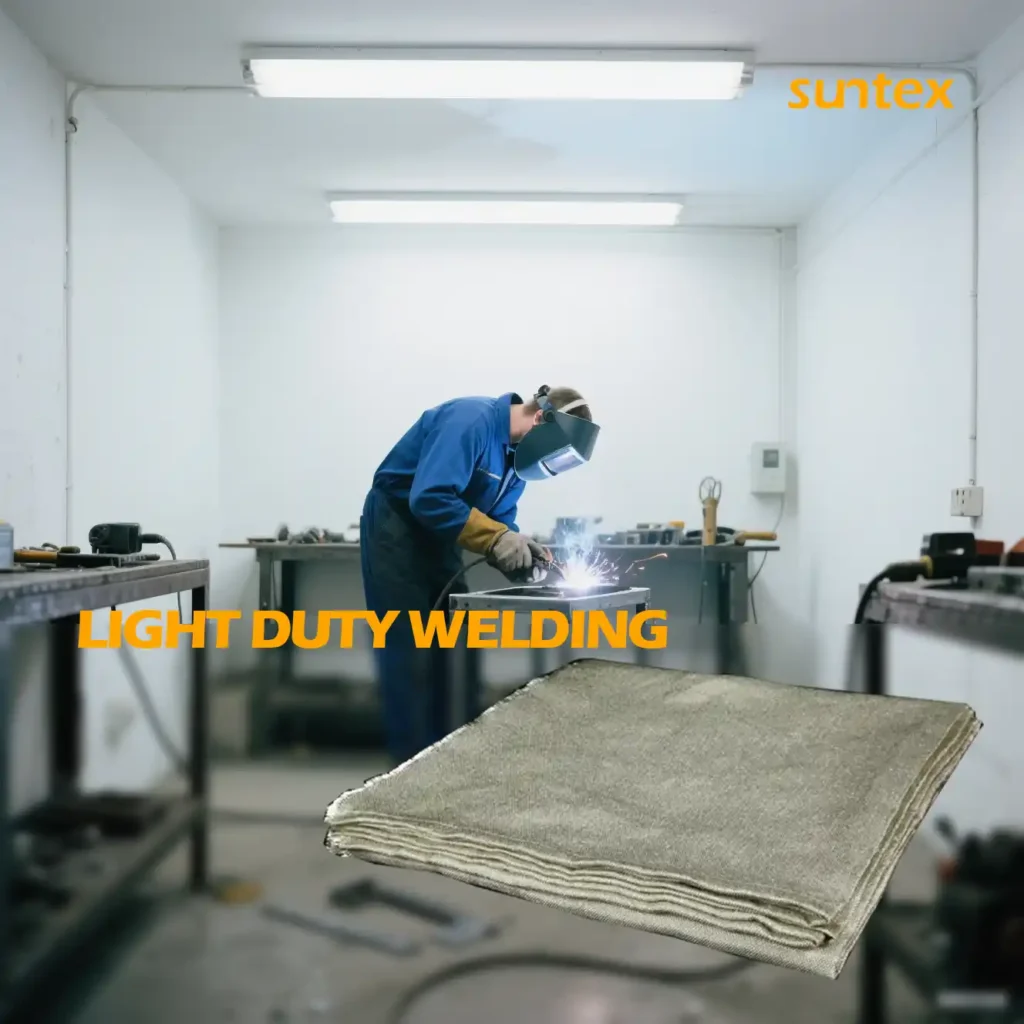
When selecting an appropriate fiberglass welding blanket, start by evaluating the temperature rating and duty level of your welding tasks. For light-duty work (e.g., general-purpose welding that involves minimal sparks and light spatter), opt for economical blankets designed for flexibility and portability. Examples include the SUNTEX-WB-1174 (silicone-coated) and SUNTEX-WB-2030 (PU-coated), which feature lightweight construction and excellent pliability to shield against minor thermal hazards.
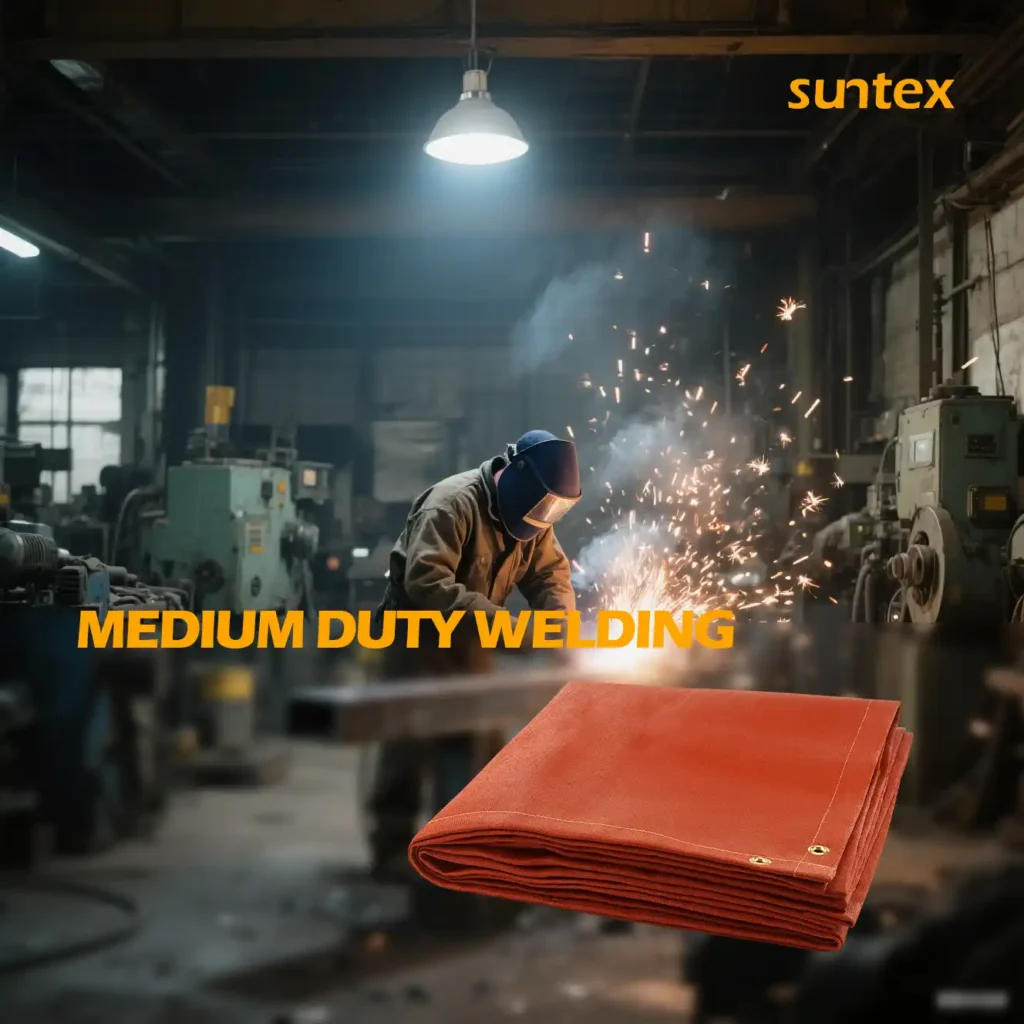
For medium-duty applications involving intense welding with persistent sparks, spatter, and light slag, choose mid-range blankets like the SUNTEX-WB-TGF816 or SUNTEX-WB-2016 (690gsm PU-coated) and SUNTEX-WB-2024 (840gsm PU-coated). These models balance durability with heat resistance, ideal for environments where moderate thermal exposure is consistent. For scenarios requiring protection against impact from heavier slag or debris, select thicker blankets such as the SUNTEX-WB-1155 (1100gsm silicone-coated) or SUNTEX-WB-5002 (1100gsm graphite-coated), which feature ≥1.0mm thickness for enhanced abrasion and impact resistance.
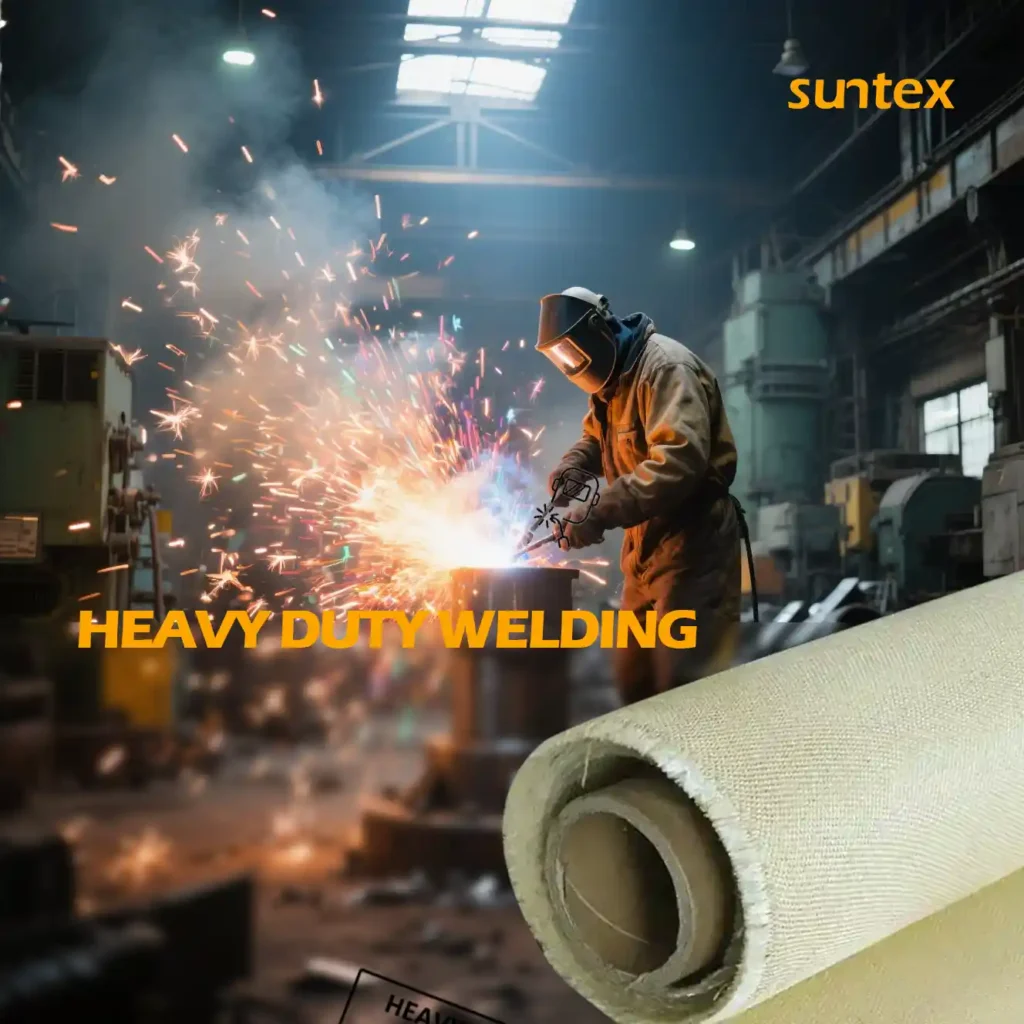
In complex, high-temperature environments where sparks or spatter reach extreme temperatures, heavy-duty welding blankets are essential. The vermiculite silica welding blanket (e.g., SUNTEX-WB-5022) is engineered for such conditions, leveraging silica’s inherent thermal stability to withstand temperatures up to 1,000°C (1,832°F). This makes it suitable for industrial settings like foundries, furnace operations, or aerospace welding, where prolonged exposure to intense heat is unavoidable.
Size is another critical factor to consider when choosing a fiberglass welding blanket. The blanket should be large enough to cover the area needing protection, with extra material to account for any movement or adjustments during use. Measuring the work area and selecting a blanket that provides adequate coverage will ensure comprehensive protection. Additionally, consider whether you need multiple blankets to cover larger or more complex spaces.
Suntex offers welding blankets in various sizes to suit different protection needs, including:
1×2m (39×79 inches), 2×2m (79×79 inches), 2×3m (79×118 inches), 4×4m (157×157 inches), 4×6m (157×236 inches), 6×8m (236×315 inches), and custom dimensions.
The type of coating or treatment applied to the blanket is also important. Some fiberglass welding blankets are treated with additional heat-resistant coatings or fire-retardant chemicals to enhance their protective properties. These treatments can improve the blanket’s resistance to sparks, spatter, and molten metal, making them more effective in certain applications. Understanding the specific requirements of your work environment will help you determine the best coating or treatment for your needs.
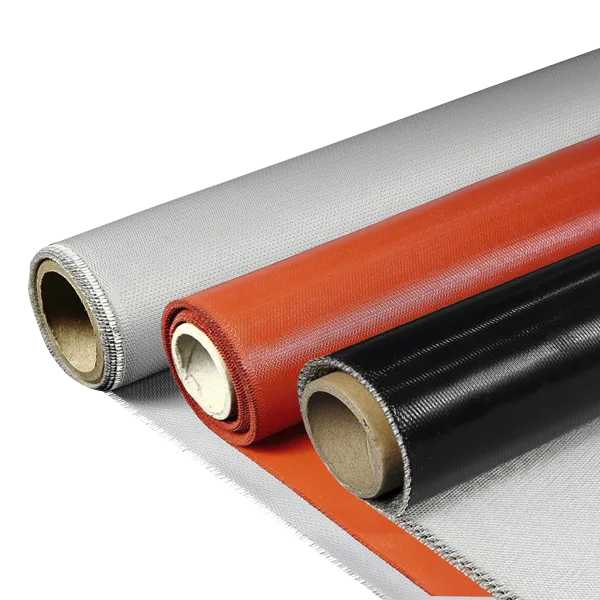
Suntex provides welding blankets with different coatings, such as silicone rubber, PU, acrylic, aluminum foil, neoprene rubber, as well as high-temperature resistant coatings like graphite and vermiculite.
Fiberglass welding blankets are used in a wide range of applications across various industries. In the automotive industry, these blankets protect vehicles and equipment from heat and sparks during welding and repair processes. They are often used to cover sensitive areas, such as seats, dashboards, and electrical components, preventing damage and ensuring safety. The blankets are also employed in manufacturing and assembly lines, where welding and cutting are common tasks.
In the construction industry, fiberglass welding blankets are essential for protecting structures and materials during welding and cutting operations. They are used to shield floors, walls, and other surfaces from heat and spatter, preventing damage and reducing the risk of fires. The blankets are also utilized in shipbuilding and repair, where they provide critical protection against the intense heat and sparks generated during welding and cutting activities.
Another common application of fiberglass welding blankets is in the maintenance and repair of industrial equipment. These blankets are used to protect machinery and components from heat and debris during welding and cutting operations. By preventing damage to equipment, the blankets help ensure the longevity and reliability of industrial machinery. This protection is particularly important in industries where downtime and equipment failure can result in significant financial losses.
Proper maintenance of fiberglass welding blankets is essential to ensure their effectiveness and longevity. One of the most important maintenance tasks is regular inspection of the blankets for signs of wear and damage. Check for tears, burns, or frayed edges that could compromise the blanket’s protective properties. If any damage is found, the blanket should be repaired or replaced to maintain optimal protection.
Cleaning the blankets is another important aspect of maintenance. Over time, welding blankets can accumulate dust, debris, and contaminants that can affect their performance. Depending on the level of contamination, the blankets can be cleaned using a soft brush, vacuum, or by gently washing with mild soap and water. It’s important to avoid damaging the blanket’s fibers or coatings.
Proper storage is also crucial for maintaining the integrity of fiberglass welding blankets. When not in use, the blankets should be stored in a cool, dry place away from direct sunlight and harsh chemicals. Rolling or folding the blankets neatly can help prevent creases and damage to the fibers. Additionally, storing the blankets in a protective cover or container can further protect them from dust and environmental factors.
While fiberglass welding blankets are designed to enhance safety, it’s important to use them correctly to ensure maximum protection. One key safety consideration is ensuring that the blanket is properly secured and positioned during use. Loose or improperly placed blankets can shift, leaving areas unprotected and increasing the risk of fires or burns. Using grommets, clamps, or other securing methods can help keep the blanket in place.
Another important safety consideration is the proper handling of the blankets. Fiberglass can cause skin irritation and respiratory issues if the fibers become airborne. When handling the blankets, it’s advisable to wear protective gloves and long sleeves to minimize direct contact with the fibers. Additionally, working in a well-ventilated area or using respiratory protection can help reduce the risk of inhaling fiberglass particles.
It’s also important to be aware of the limitations of fiberglass welding blankets. While they offer excellent protection against heat and sparks, they are not fireproof and can degrade over time with repeated exposure to extreme temperatures. Regular inspection and maintenance, as mentioned earlier, are crucial for ensuring the blankets remain effective. Understanding the specific capabilities and limitations of the blankets will help you use them safely and effectively.
Fiberglass welding blankets are versatile for general industrial use, ideal for light to medium-duty welding tasks like automotive repairs, construction, and manufacturing. Their lightweight design and flexibility make them easy to drape over equipment or wrap around work areas, protecting against sparks and moderate spatter in workshops and fabrication sites.
Leather welding blankets shine in applications requiring rugged abrasion resistance, such as manual welding in tight spaces or on uneven surfaces. Commonly used in metalworking and shipbuilding, their durable hide material blocks sparks effectively for short-term use, though they’re less suited for large-scale coverage or complex configurations.
Carbon fiber welding blankets cater to high-performance industries like aerospace and foundries, where extreme heat and chemical resistance are critical. Their strength-to-weight ratio makes them perfect for protecting sensitive components during precision welding or in environments with corrosive elements, though their premium cost restricts use to specialized, high-stakes applications.
Fiberglass welding blankets can typically withstand temperatures up to 1000°F (537°C) or higher (1,832°F / 1,000°C), depending on the specific type and treatment of the blanket. It’s important to check the manufacturer’s specifications to determine the exact temperature rating of the blanket.
Yes, fiberglass welding blankets are designed to be safe, shielding users and work areas from heat and sparks. However, their safety depends on proper use: never expose them to temperatures exceeding their rating, and always inspect for tears or damage before use—compromised blankets lose their protective capabilities and should not be used.
Fiberglass welding blankets are fire-resistant, not completely fireproof. They’re designed to withstand high temperatures (up to 1,000°F/537°C for standard variants, 1,000°C/1,832°F for silica-based models) and prevent sparks/spatter from igniting surrounding materials. However, prolonged exposure to flames or temperatures exceeding their rating can damage the material, compromising its protective ability. Always verify the blanket’s temperature rating matches your work environment and inspect for damage before use to ensure optimal safety.
Yes, fiberglass welding blankets are reusable and can provide reliable protection over multiple uses. Proper maintenance, including regular inspection, cleaning, and storage, is essential to ensure the blankets remain effective and durable over time.
Fiberglass welding blankets can produce airborne particles if the fibers become damaged or disturbed. These particles can cause skin irritation and respiratory issues if inhaled. Proper handling, including wearing protective gloves and working in a well-ventilated area, can help minimize the risk of exposure to these particles.
Fiberglass welding blankets can be secured in place using various methods, such as grommets, clamps, magnets, or weights. Ensuring the blanket is properly secured and positioned is crucial for providing effective protection and preventing it from shifting during use.
Yes, fiberglass welding blankets can be used for a variety of high-heat applications, including cutting, grinding, and brazing. Their versatility and high-temperature resistance make them suitable for protecting surfaces and equipment in various industrial processes.
But you should choose the right welding blankets for different temperatures.
High-quality fiberglass welding blankets can be purchased from industrial safety suppliers, welding equipment retailers, and online marketplaces. It’s important to choose a reputable supplier and consider factors such as temperature rating, size, and additional treatments to ensure you select the best blanket for your needs.
Suntex is such a qualified welding blanket manufacturer. Founded in 2004, it collaborates with global top welding brands, provides OEM services, and manufactures the safest welding blankets. If you have needs for welding blankets, please contact Mr. Jason via email: [email protected].
Other FAQ / Blogs / News >>