Industry Insights: How the AI & Electronics Revolution is Reshaping the Supply Chain and Driving Upstream Fiberglass Yarn Costs
Read More >>
How to go to Suntex?
Why is Suntex a reliable supplier?
Besides competitive prices, what else can Suntex provide?
What are Suntex's products?
Looking for any help?
PTFE (Polytetrafluoroethylene), also commonly known as Teflon, is a synthetic fluoropolymer. The brand name “Teflon” was trademarked by the DuPont company, which played a key role in commercializing PTFE after its accidental discovery by Roy J. Plunkett in 1938. Plunkett was researching refrigerants when he noticed that a sample of tetrafluoroethylene gas had polymerized into a waxy, slippery solid—later named PTFE. DuPont introduced it to the market under the Teflon brand in the 1940s, and the name has since become a widely recognized synonym for PTFE in many regions.
PTFE-coated glass fiber fabric, as its name suggests, is a high-performance, multi-purpose composite material consisting of a glass fiber fabric base with a polytetrafluoroethylene (PTFE) coating. It combines the high strength of glass fiber fabric with the excellent properties of PTFE, excelling in numerous fields.
Glass fiber fabric, as the base material, is woven from glass fibers through textile processes. Glass fiber is an excellent inorganic non-metallic material, whose main components are oxides such as silicon dioxide, aluminum oxide, and calcium oxide. The World Health Organization (WHO) clearly states that glass fiber is not a carcinogen. Although the International Agency for Research on Cancer (IARC) classifies some special glass fibers as “Group 2B possible carcinogens,” this is based on high-dose animal experiments, and there is no need to worry about finished glass fiber fabric in daily contact. Glass fiber itself has high strength and high modulus, with a tensile strength of 1000-3000MPa and an elastic modulus of about 70-80GPa, which can provide reliable structural strength for the final product. At the same time, it also has excellent high-temperature resistance, being able to remain stable at temperatures up to 500-800°C, and is resistant to chemical corrosion, having good tolerance to common acids, alkalis, and other chemical substances. Glass fiber fabric made through different weaving methods, such as plain weave, twill weave, and satin weave, further optimizes its mechanical properties, being able to withstand large tensile and compressive forces, providing a solid attachment base for the PTFE coating.

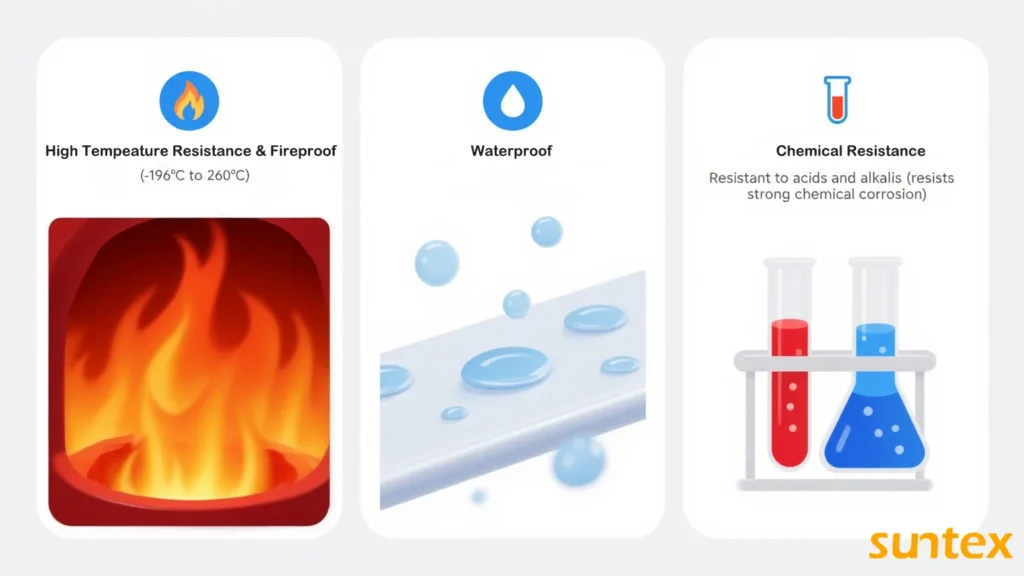
PTFE (Polytetrafluoroethylene), commercially known as Teflon, has extremely stable chemical properties. The brand name “Teflon” was registered by DuPont in 1945, derived from the Greek word “tetra” (meaning four) and “fluoro” (referring to fluorine), combined with a suffix to create a memorable trade name for their PTFE-based products. It is a polymer compound polymerized from tetrafluoroethylene, with the molecular formula (C₂F₄)ₙ. PTFE was accidentally discovered by Roy Plunkett in 1936 while researching substitutes for Freon, and was initially used for fusion-proof sealing gaskets in atomic bombs, artillery shells, etc., and was industrially produced in 1948. Its molecular structure has fluorine atoms closely arranged around the carbon chain, forming a highly stable chemical structure. This structure endows PTFE with many unique properties. Firstly, it has excellent temperature resistance. According to relevant research data, this material can be used normally in an extremely wide temperature range, from -196°C at low temperatures to 300°C at high temperatures, and some products can even withstand higher temperatures. The standards of the American Society for Testing and Materials (ASTM) also have clear specifications and testing methods for its temperature resistance, verifying its ability to maintain stable performance in extreme temperature environments, whether in cold polar environments or next to high-temperature industrial furnaces, without deformation, aging, etc., and has good weather resistance and anti-aging ability. For example, in the application of conveyor belts in high-temperature baking equipment, PTFE-coated glass fiber fabric can still maintain normal working conditions in a high-temperature environment for a long time.
Its surface non-adhesiveness is excellent, and it is almost impossible to adhere to any other substances. This is because the surface energy of PTFE is extremely low, only 0.019N/m, and almost all solid materials are difficult to adhere to its surface. This makes the material surface extremely easy to clean, and various oils, stains, or other attachments can be easily removed. For example, if the anti-stick pad used in the kitchen in daily life is made of this material, it is only necessary to gently wipe it when cleaning food residues. In industrial production, for conveyor belts used to transport viscous materials, PTFE-coated glass fiber fabric can effectively avoid material adhesion, ensure smooth transportation, reduce downtime for cleaning, and greatly improve production efficiency.
Its chemical corrosion resistance is also a major highlight, being able to resist the erosion of strong acids, strong alkalis, aqua regia, and various organic solvents. In the chemical industry, many production processes involve highly corrosive chemical substances. Using PTFE-coated glass fiber fabric to make pipeline linings, reactor linings, etc., can effectively prevent equipment from being corroded, extend the service life of equipment, and reduce maintenance costs. For example, in chemical equipment dealing with strong acid media such as sulfuric acid and hydrochloric acid, PTFE-coated glass fiber fabric can remain stable for a long time, ensuring the safe operation of the equipment.
The material has a low friction coefficient and performs excellently in oil-free self-lubricating application scenarios. Its friction coefficient is usually between 0.05-0.1, which is one of the lowest among known solid materials. This characteristic makes it favored in the field of mechanical transmission components and bearings, being able to reduce the frictional resistance between components, reduce energy consumption, and at the same time improve the stability and reliability of equipment operation, reduce wear, and extend the service life of mechanical components.
PTFE-coated glass fiber fabric also has a certain degree of transparency, with a light transmittance in the range of 6%-13, and has high insulation performance, with a dielectric constant generally between 2.0-2.6, which can effectively prevent the passage of current, and also has anti-ultraviolet and anti-static functions. In the field of electronic appliances, it can be used to make insulating materials to ensure the safe operation of electrical equipment; in the application of outdoor building membrane materials, the anti-ultraviolet function can make the membrane material withstand long-term sunlight without aging and deterioration, and the anti-static function can prevent dust from being adsorbed on the membrane surface due to static electricity, keeping the building’s appearance clean. The material has high strength, good mechanical properties, good dimensional stability, and a small elongation coefficient, and can still maintain the stability of shape and size when subjected to large external forces.
From the perspective of variety classification, PTFE-coated glass fiber fabric covers a variety of types, and each type of product is suitable for different industrial scenarios due to its unique structural design and performance focus.
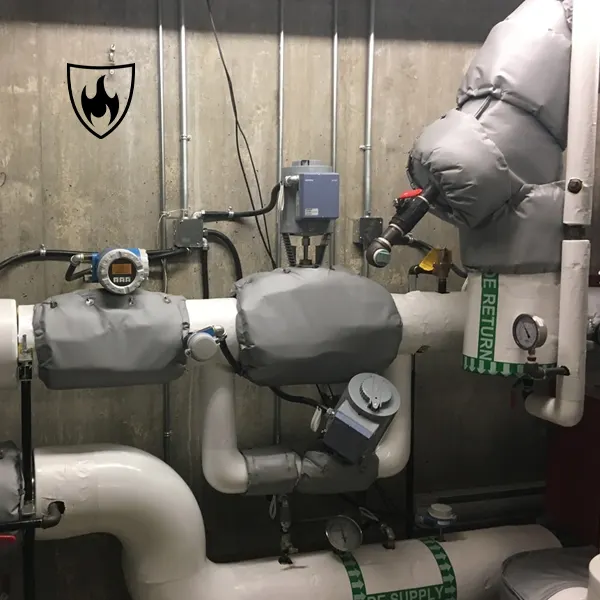
Due to its excellent performance, PTFE-coated glass fiber fabric has a wide range of application fields. In the aviation field, it can be used for the protection and heat insulation of aircraft engine components, ensuring the safe and stable operation of the engine in high-temperature and high-speed operating environments. The engine generates extremely high temperatures during operation, and the high-temperature resistance and heat insulation performance of PTFE-coated glass fiber fabric can effectively protect the structural components around the engine from damage due to overheating. In the papermaking industry, it is used for conveyor belts of papermaking equipment, surface covering of drying cylinders, etc., to prevent paper adhesion, improve paper production quality, and efficiency. In the food processing industry, it is used in food baking trays, conveyor belts, and heat-sealing materials for food packaging, etc., because it meets FDA (U.S. Food and Drug Administration) regulations and USDA (U.S. Department of Agriculture) food contact standards, ensuring food safety. In the field of environmental protection, it can be used for corrosion-resistant components of sewage treatment equipment, filter materials for waste gas treatment, etc. In sewage treatment, it can resist the corrosion of various chemical substances in sewage, ensuring the long-term stable operation of equipment; in waste gas treatment, it can effectively filter harmful particles and chemical substances, purifying the air. In the textile printing and dyeing industry, it is widely used in the guide belts of printing and dyeing equipment, conveyor belts of drying equipment, etc., facilitating the smooth progress of the printing and dyeing process. In clothing manufacturing, it is used to make special functional clothing, such as oil-proof, waterproof, and high-temperature resistant work clothes. The chemical industry is an important application field, and various reactors, pipelines, storage containers’ linings, anti-corrosion coatings, etc., are inseparable from it. In the glass industry, it is used in the forming, handling, and other links of glass products to prevent glass from adhering to equipment. In the pharmaceutical industry, PTFE-coated glass fiber fabric that meets pharmaceutical production hygiene standards can be used for pharmaceutical packaging, protection of production equipment, etc. In the electronics industry, it plays an important role in the manufacture and transportation of high-frequency copper-clad laminates, insulating materials, and electronic components. In the construction field, as the base fabric of roof membrane structures, its high strength, weather resistance, self-cleaning properties, etc., make it an ideal material for large-span building membrane structures. In the grinding wheel cutting industry, it is used for protective and auxiliary materials of cutting equipment, improving cutting efficiency and safety. In mechanical equipment, it is widely used in various mechanical transmission belts, seals, protective curtains, etc., improving the performance and reliability of mechanical equipment.
Despite its exceptional performance, PTFE has faced growing scrutiny in recent years due to its association with per- and polyfluoroalkyl substances (PFAS), a group of man-made chemicals known for their persistence in the environment and potential health risks. PTFE itself is chemically inert, but its historical production relied on perfluorooctanoic acid (PFOA), a PFAS compound classified as a “probable human carcinogen” by the U.S. Environmental Protection Agency (EPA) and linked to hormonal disruptions, liver damage, and developmental issues in animal studies. While modern manufacturing processes have largely phased out PFOA, PTFE remains part of the broader PFAS family, which is regulated globally for its “forever chemical” traits—resistance to degradation, bioaccumulation in food chains, and widespread presence in water, soil, and even human bloodstreams.
The European Union has taken aggressive action to restrict PFAS, including PTFE, under its Registration, Evaluation, Authorization, and Restriction of Chemicals (REACH) regulation. In February 2023, the European Commission proposed a comprehensive restriction on all PFAS, aiming to ban their production, import, and use across most applications by 2026, with limited exceptions for critical uses where no alternatives exist (e.g., medical devices). For PTFE-coated materials like glass fiber fabric, the ban would apply to non-essential uses such as industrial conveyor belts, textile coatings, and food contact surfaces by 2025, pending a review of alternative technologies. The EU’s European Chemicals Agency (ECHA) emphasizes that PFAS “pose a significant risk to human health and the environment” and that a phase-out is necessary to meet the bloc’s “zero pollution” goals by 2050.
In the U.S., federal regulation of PFAS has been fragmented, but several states have enacted strict timelines. Maine was the first to ban the sale of PFAS-containing consumer products by 2030, including PTFE-based coatings. California’s Safer Consumer Products regulations list PTFE as a “chemical of concern,” requiring manufacturers to report alternatives by 2024. The EPA, under its 2021 PFAS Strategic Roadmap, has proposed designating PFOA and PFOS (another PFAS) as hazardous substances, which would trigger cleanup requirements and restrict their release. While a federal ban on PTFE is not yet in place, the EPA has signaled intent to phase out non-essential PFAS uses, with industrial coatings—including PTFE-coated fabrics—facing potential restrictions by 2027.
These regulatory pressures have pushed manufacturers to develop alternatives. Silicone-coated glass fiber fabrics, ceramic-based coatings, and high-performance polymers like polyphenylene sulfide (PPS) are emerging as substitutes in applications such as high-temperature gaskets and non-stick surfaces, though they often lack PTFE’s full range of properties. Some companies are also investing in “PFAS-free” PTFE production, using short-chain fluorinated compounds that degrade more quickly, though critics argue these may still pose risks.
Other FAQ / Blogs / News >>