The Best JIS A-Class Welding Fire Blankets for Japanese Factory Safety
Read More >>
How to go to Suntex?
Why is Suntex a reliable supplier?
Besides competitive prices, what else can Suntex provide?
What are Suntex's products?
Looking for any help?
When it comes to choosing the right material for your project, the debate between glass fiber and aramid fabric is more significant than you might think. Each of these innovative materials boasts unique properties that can elevate your project, whether you’re involved in aerospace, automotive, or sports equipment. Glass fiber, known for its lightweight and cost-effectiveness, offers exceptional tensile strength and versatility. On the other hand, aramid fabric excels in high-temperature applications, renowned for its remarkable durability and resistance to abrasion. Understanding the key differences between these materials can be the deciding factor in achieving optimal performance and longevity. So, which material truly reigns supreme? Join us as we delve into the strengths and drawbacks of glass fiber and aramid fabric, helping you make an informed choice tailored to your specific needs and project requirements.

One of the first considerations in material selection is often weight, as it directly impacts the efficiency and usability of the final product. Fiberglass fabric, while lighter than many traditional materials like metal, has a relatively higher density compared to aramid fabric. This means that for projects where minimizing weight is a top priority, aramid fabric holds a distinct advantage. Its low density allows for the creation of products that are significantly lighter without sacrificing essential structural integrity. For example, in applications such as aerospace components or high-performance sports equipment, where every ounce matters, aramid’s lightweight nature can lead to improved fuel efficiency or enhanced maneuverability.
Fiberglass, however, strikes a balance between weight and cost. While it may not be as light as aramid, its density is still low enough to offer benefits over heavier materials, making it a popular choice in projects where extreme weight reduction isn’t the primary goal but a reasonable weight-to-strength ratio is still desired.
Tensile strength, the ability to withstand pulling forces without breaking, is a critical property in structural applications. Aramid fabric shines here with its very high tensile strength, capable of bearing large pulling forces that would cause many other materials to fail. This makes it a go-to option in scenarios where resistance to stretching and tearing is paramount, such as in bulletproof vests, industrial safety harnesses, and high-stress aerospace parts.
Fiberglass fabric also possesses a decent level of tensile strength, sufficient for a wide range of applications. It can handle moderate pulling forces, making it suitable for uses like boat hulls, automotive body panels, and building reinforcements. However, when compared to aramid, its tensile strength falls short, making it less ideal for projects that demand the highest level of resistance to tension.
In terms of elastic modulus, which measures stiffness, aramid fabric has a higher modulus than fiberglass. This means aramid is stiffer and less prone to deformation under stress, while still maintaining a degree of flexibility. Fiberglass, with its lower elastic modulus, is more likely to bend or flex when subjected to force, which can be an advantage in applications where some give is needed, but a disadvantage in situations requiring rigid structural support.
Both fiberglass and aramid fabrics offer good corrosion resistance, but aramid takes it a step further with exceptional resistance to a wide range of chemical substances. It can withstand exposure to harsh acids, alkalis, and solvents that might degrade other materials, making it invaluable in chemical processing plants, industrial cleaning equipment, and protective clothing for workers handling corrosive substances.
Fiberglass fabric is no slouch in this department either. It can resist the erosion of general acids and alkalis, which is why it’s commonly used in chemical storage tanks, pipes, and other industrial components that come into contact with moderately corrosive materials. However, it may not hold up as well as aramid in extremely harsh chemical environments.
When it comes to withstanding high temperatures, aramid fabric is a clear winner. It can endure prolonged exposure to temperatures of several hundred degrees Celsius without significant performance degradation. This makes it ideal for fire-resistant clothing, thermal insulation in industrial furnaces, and components in aerospace and automotive applications that are exposed to high heat during operation.
Fiberglass fabric has a certain level of high-temperature resistance and can remain stable at relatively high temperatures. It’s often used in applications like oven insulation, fireplace screens, and some industrial heat shields. But unlike aramid, it will gradually soften and eventually melt when exposed to extremely high temperatures, limiting its use in the most demanding high-heat scenarios.
Fiberglass fabric is celebrated for its exceptional processability, and a key part of its versatility lies in its ability to be composited with a wide range of materials. It readily bonds with substances like silicone, polyurethane (PU), polytetrafluoroethylene (PTFE), acrylic, and various inorganic high-temperature materials. This adaptability allows it to be tailored for specific functions: for example, PTFE-coated fiberglass gains non-stick properties ideal for baking sheets, while silicone-composited fiberglass enhances heat resistance for gaskets and insulation. Its ease of cutting, weaving, and shaping—using techniques like hand lay-up molding, spray-up, and compression molding—further supports mass production of complex, cost-effective products.
Aramid fabric, while more challenging to process due to its high strength and abrasion resistance, is commonly enhanced through coating or lamination. It is frequently coated with silicone to boost heat resistance and flexibility, making it suitable for high-temperature gaskets and protective sleeves. Lamination with aluminum film is another common treatment, which adds barrier properties against heat, moisture, and electromagnetic radiation, expanding its use in aerospace and industrial shielding applications. However, these processes require specialized tools and precise control, increasing production time and costs compared to fiberglass.
The unique properties of fiberglass and aramid fabrics dictate their distinct application areas. Fiberglass fabric is a workhorse in industries such as construction, where it’s used in insulation materials, roofing panels, and structural reinforcements. In the automotive sector, it finds use in body kits, interior components, and underhood parts. It’s also widely employed in electronics for circuit boards and in marine applications for boat hulls and decks, thanks to its combination of strength, corrosion resistance, and cost-effectiveness—amplified by its ability to composite with diverse materials.
Aramid fabric’s claim to fame is in high-performance and safety-critical applications. In the defense and military sector, it’s a key material in bulletproof vests, helmets, and ballistic shields due to its exceptional tensile strength. In aerospace, it’s used in components that require both light weight and high strength, such as parachutes and aircraft structural parts. The fire protection industry relies on aramid for heat-resistant clothing and blankets, and in sports, it’s used in high-end equipment like tennis rackets, golf clubs, and bicycle frames, where durability and lightweight performance are essential—with coated or laminated variants enhancing its functionality further.
A critical factor in material selection is cost, and here the difference between fiberglass and aramid fabric is stark. Aramid fabric is significantly more expensive, with costs typically at least 10 times higher than fiberglass fabric. This price gap stems from aramid’s complex manufacturing process, raw material costs, and specialized processing requirements. Fiberglass, by contrast, benefits from lower raw material expenses and simpler production methods, making it a budget-friendly choice for projects where extreme performance isn’t necessary. For large-scale applications or cost-sensitive projects, fiberglass’s affordability often makes it the practical option, even when aramid offers superior properties.
The lifespan of both fabrics is closely tied to their operating environment and application. Fiberglass fabric generally offers a reliable lifespan in moderate conditions. When properly maintained and used in environments without extreme heat, prolonged UV exposure, or highly corrosive substances, it can last for decades—especially when composited with protective materials like UV-resistant acrylics or corrosion-resistant PTFE. However, in harsh conditions, such as constant exposure to high temperatures above its tolerance or strong oxidizing chemicals, its lifespan may shorten due to gradual degradation.
Aramid fabric, thanks to its exceptional resistance to abrasion, chemicals, and high temperatures, typically boasts a longer lifespan in demanding environments. It maintains its structural integrity even after prolonged exposure to stress, making it a durable choice for long-term use in safety gear, aerospace components, and industrial equipment. While its initial cost is higher, its extended service life in harsh conditions often justifies the investment, especially in applications where failure could have severe consequences.
Suntex is a leading manufacturer of high-temperature industrial textiles, with a strong focus on producing coated and laminated high-temperature fabrics. For those seeking reliable fiberglass and aramid fabric solutions, Suntex offers a diverse range of products tailored to industrial needs.
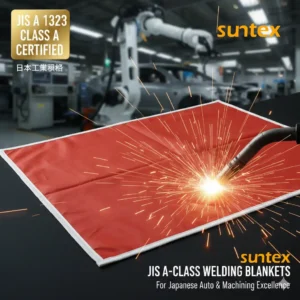
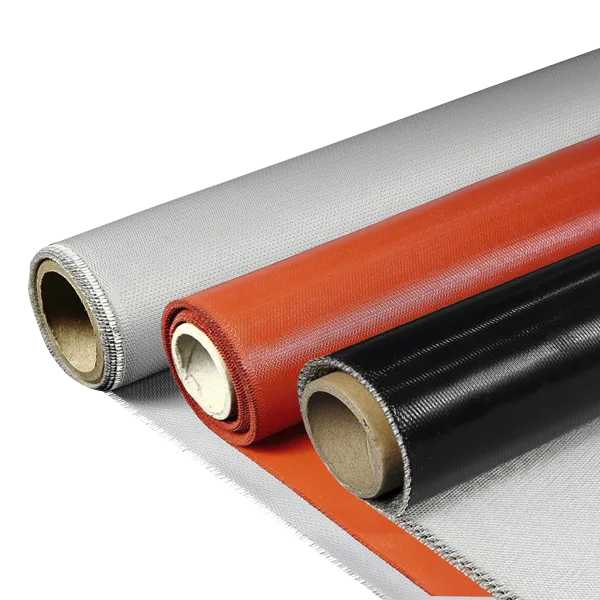
In terms of fiberglass fabrics, Suntex provides fiberglass fabric and silica fabric coated or laminated with various materials, including silicone, PU, PTFE, acrylic, aluminum foil/film, neoprene, graphite, CS, vermiculite, and other inorganic high-temperature materials. These versatile fabrics find applications in a wide array of scenarios, such as thermal insulation covers, welding blankets, expansion fabric joints, smoke curtains & fire curtains, and car fire blankets, ensuring effective protection and performance in high-temperature environments.
For aramid fabrics, Suntex specializes in supplying different kinds of silicone-coated aramid fabrics. These fabrics are designed to excel in demanding applications, including robot arm protection covers, expansion fabric joints, and thermal insulation covers, leveraging the combined benefits of aramid’s strength and silicone’s heat resistance.
To learn more about Suntex’s product offerings or to inquire about pricing, you can contact Mr. Jason via email at [email protected].
So, which material is right for your project? If cost-effectiveness, ease of processing, and versatility—including the ability to composite with a wide range of materials—are your top priorities, and your project doesn’t require extreme resistance to high temperatures or the highest levels of tensile strength, fiberglass fabric is likely the way to go. It offers a reliable balance of properties that make it suitable for a wide range of general applications, with a lifespan that holds up well in moderate environments.
On the other hand, if your project demands exceptional tensile strength, superior high-temperature resistance, and excellent chemical resistance, and you’re willing to invest in the higher cost (often 10x or more) and more complex processing, aramid fabric is the superior choice. Its ability to be coated or laminated with silicone and aluminum film further enhances its functionality, and its longer lifespan in harsh conditions makes it ideal for safety-critical and high-performance applications where reliability is non-negotiable.
Ultimately, the decision between fiberglass and aramid fabric depends on your specific project requirements, budget, and the environmental conditions the material will face. By carefully evaluating their properties, costs, lifespan, and material compatibility, you can select the material that will ensure your project’s success, delivering optimal performance and longevity.
Other FAQ / Blogs / News >>