The Best JIS A-Class Welding Fire Blankets for Japanese Factory Safety
Read More >>
How to go to Suntex?
Why is Suntex a reliable supplier?
Besides competitive prices, what else can Suntex provide?
What are Suntex's products?
Looking for any help?
In the world of high-performance industrial textiles, few materials blend versatility, durability, and adaptability quite like uncured silicone coated fiberglass fabric. Yet for many professionals—from HVAC technicians to industrial engineers—this material remains a bit of a mystery. What exactly is it? Why is the silicone left “uncured” instead of cured rubber? And how does it become the backbone of critical components like flexible air hoses and fabric expansion joints?
In this blog, we’ll demystify uncured silicone coated fiberglass fabric, breaking down its composition, the science behind its “uncured” design, and its real-world applications that keep industries running smoothly. By the end, you’ll understand why this unsung material is a game-changer in sectors where heat resistance, flexibility, and reliability are non-negotiable.
To grasp what uncured silicone coated fiberglass fabric is, let’s start with its two core components: the base layer and the coating—and then clarify what “uncured” actually means.
1. The Foundation: Fiberglass Fabric
At its heart, this material is built on a fiberglass fabric base. Fiberglass itself is made from fine strands of glass woven into a flexible, lightweight textile. It’s chosen for three key reasons: first, it boasts exceptional thermal resistance, able to withstand high temperatures without melting or degrading. Second, it’s mechanically strong, providing structural stability even when thin. Third, it’s resistant to chemicals, moisture, and UV radiation—qualities that make it ideal for harsh industrial environments.
The fiberglass fabric acts as the “skeleton” of the material, giving it shape, tensile strength, and heat resistance. But on its own, fiberglass lacks the sealing properties and elasticity needed for many applications—which is where the silicone coating comes in.
2. The Coating: Uncured Silicone Rubber
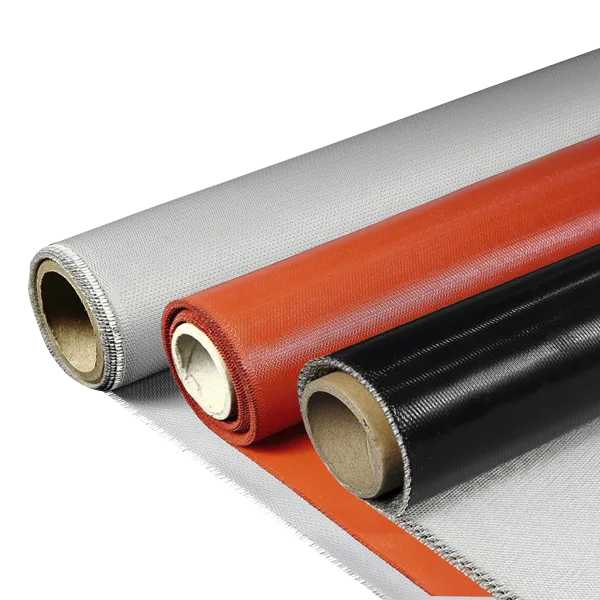
The fiberglass base is uniformly coated with uncured silicone rubber. Silicone rubber is a synthetic elastomer known for its outstanding heat resistance (often withstanding -60°C to 230°C, and even higher for specialized grades), flexibility, and water repellency. But here’s the key: “uncured” does not mean the silicone is unstable or incomplete. Instead, it refers to a pre-cured state—the silicone has been partially processed to be tacky (slightly sticky) and malleable, but it hasn’t yet been subjected to the final heat or chemical treatment that would lock it into a rigid, fully cross-linked form.
At first glance, leaving silicone uncured might seem counterintuitive. After all, we usually think of “curing” as the step that makes a material strong and durable. But in the case of silicone coated fiberglass fabric, the uncured state is intentional—and critical to its performance. Here’s why:
1. Enables Custom Shaping and Sealing
The primary advantage of uncured silicone is its malleability and tackiness. Fully cured silicone is rigid or semi-rigid, making it impossible to mold into complex shapes or form tight seals around irregular surfaces. Uncured silicone, by contrast, can be cut, folded, wrapped, or pressed into place—conforming perfectly to the contours of pipes, hoses, or joints.
When the material is installed (e.g., wrapped around a flexible air hose or formed into an expansion joint), it’s then subjected to a final curing process (by heat curing). This on-site or post-installation curing locks the silicone into the desired shape, creating a permanent, airtight, and waterproof seal that’s tailored to the specific application. Without the uncured state, the material would be too rigid to adapt to custom configurations.
2. Enhances Adhesion to Substrates
Uncured silicone has a natural tackiness that allows it to adhere tightly to other materials—whether it’s metal pipes, plastic components, or even other layers of fiberglass fabric. During the final curing process, this adhesion strengthens, creating a bond that resists separation even under extreme heat, pressure, or vibration. Fully cured silicone, on the other hand, has little to no tackiness and would require additional adhesives (which may not withstand high temperatures) to stick to substrates.
3. Maintains Flexibility Post-Curing
Unlike some materials that become brittle after curing, uncured silicone coated fiberglass fabric retains its flexibility once fully cured. The partial pre-curing of the silicone ensures that when it’s finally cross-linked, it forms an elastomeric (rubber-like) structure that can stretch, bend, or compress without cracking. This is essential for applications like expansion joints, which need to move with thermal expansion or vibration without failing.
The unique combination of fiberglass strength and uncured silicone adaptability makes this material indispensable in a range of industrial and commercial applications. Below are two of its most common and critical uses, along with why it’s the perfect choice for each:
1. Flexible Air Hoses (HVAC, Industrial Ventilation)
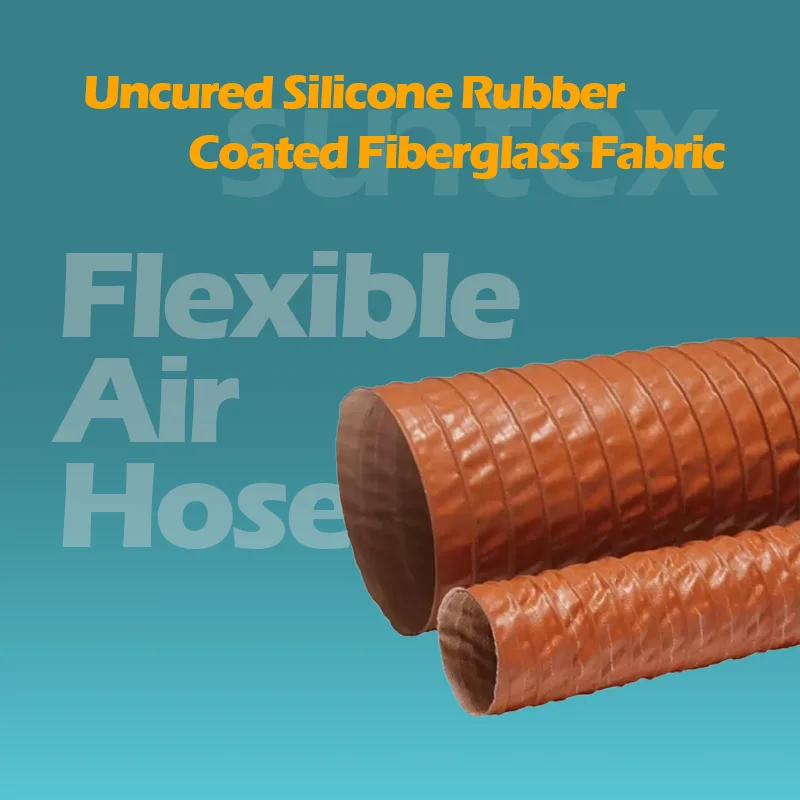
Flexible air hoses are used in HVAC systems, industrial ventilation, and even aerospace to transport air, gases, or fumes—often in environments with high temperatures or chemical exposure. Uncured silicone coated fiberglass fabric is ideal for this application for three reasons:
Additionally, the fiberglass base prevents the hose from collapsing under vacuum pressure, while the silicone coating resists moisture and chemicals that could corrode other materials.
2. Fabric Expansion Joints (Power Plants, Refineries, Manufacturing)
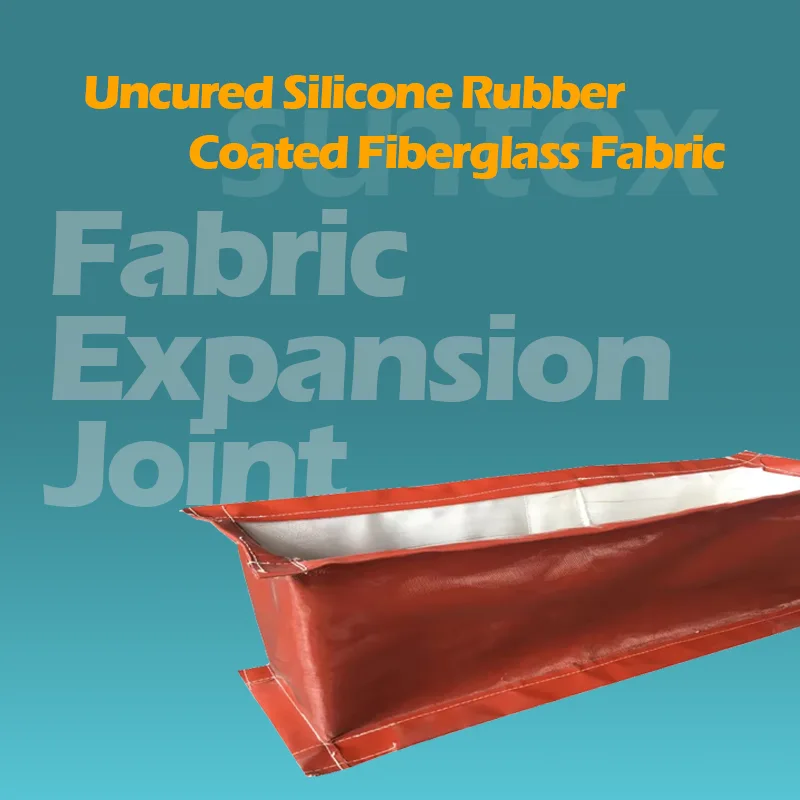
Fabric expansion joints are used in piping systems (e.g., in power plants, refineries, or cement factories) to absorb thermal expansion, vibration, or misalignment between pipe sections. They’re essentially the “shock absorbers” of industrial piping—and uncured silicone coated fiberglass fabric is the top choice for this tough job:
3. Industrial Heating Blankets
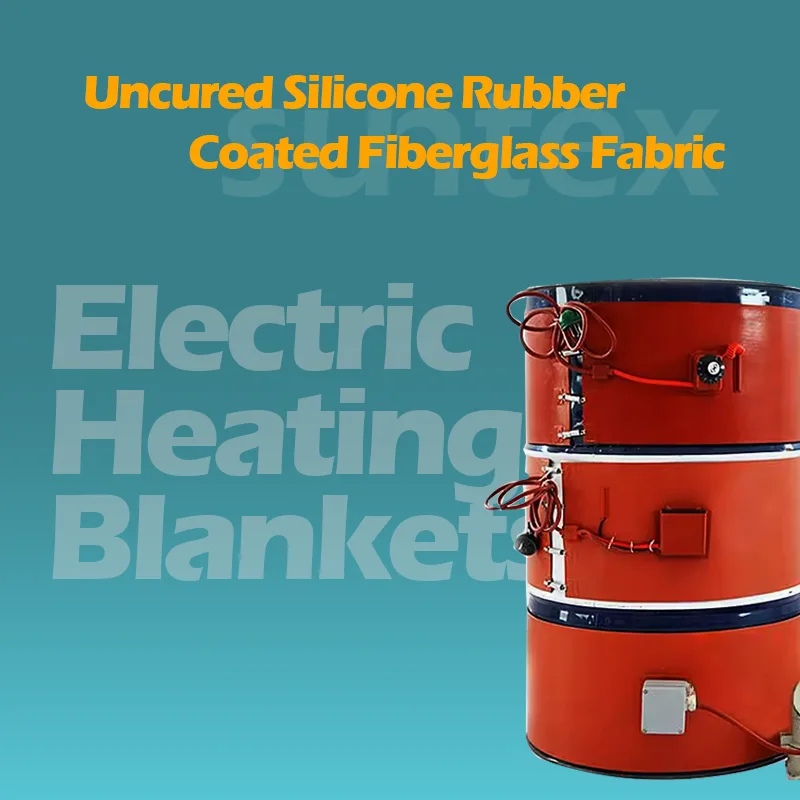
Industrial heating blankets are another key application where uncured silicone coated fiberglass fabric excels, widely used in manufacturing, construction, and oil & gas industries to provide uniform, high-temperature heating for materials like composites, pipelines, or curing resins. The material’s design makes it a perfect fit here: the fiberglass base ensures structural integrity even when wrapped around curved or irregularly shaped workpieces, while the uncured silicone coating allows for tight conformity to the surface—ensuring no heat is wasted. During production, the uncured silicone is shaped to match the blanket’s design, then cured to form a heat-resistant, waterproof layer that can handle operating temperatures up to 230°C. Additionally, the silicone coating resists oil, chemicals, and moisture common in industrial settings, while the fiberglass core prevents the blanket from tearing or deforming under repeated use. This combination makes the blankets durable, energy-efficient, and safe for use in harsh industrial environments where consistent heating is critical.
At its core, uncured silicone coated fiberglass fabric matters because it solves problems that no single material can. It combines the strength of fiberglass with the flexibility of silicone—made possible by the uncured state—to create components that are reliable, durable, and adaptable to harsh conditions. For industries like HVAC, power generation, and manufacturing, this means:
Uncured silicone coated fiberglass fabric may not be the most well-known material, but it’s a workhorse in industries where performance and reliability are critical. By understanding its composition—fiberglass base plus uncured silicone coating—its intentional “uncured” design (for adaptability and adhesion), and its key applications (flexible air hoses, expansion joints, etc.), you can appreciate why it’s an essential component in modern industrial systems.
Whether you’re an HVAC technician installing a flexible air hose or an engineer designing a power plant’s piping system, this material offers a unique blend of strength and flexibility that no other material can match. It’s a testament to how combining two simple components—with a little science behind the curing process—can create something truly indispensable.
Other FAQ / Blogs / News >>