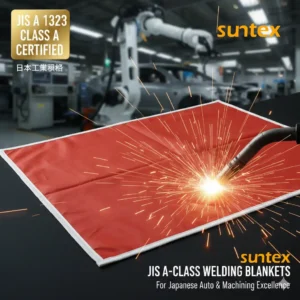
The Best JIS A-Class Welding Fire Blankets for Japanese Factory Safety
Read More >>
How to go to Suntex?
Why is Suntex a reliable supplier?
Besides competitive prices, what else can Suntex provide?
What are Suntex's products?
Looking for any help?
Welding blankets are one of the most discussed safety tools on Reddit, where fabricators, DIY welders, and professionals constantly share real-world experiences and challenges. From choosing the right material to understanding heat resistance, users ask practical questions that highlight the importance of reliable protection in welding environments. In this guide—Reddit’s Top Questions About Welding Blankets Answered—we break down the most common FAQs, offer expert insights, and share tips to help you select a welding blanket that truly performs. Let’s dive in.
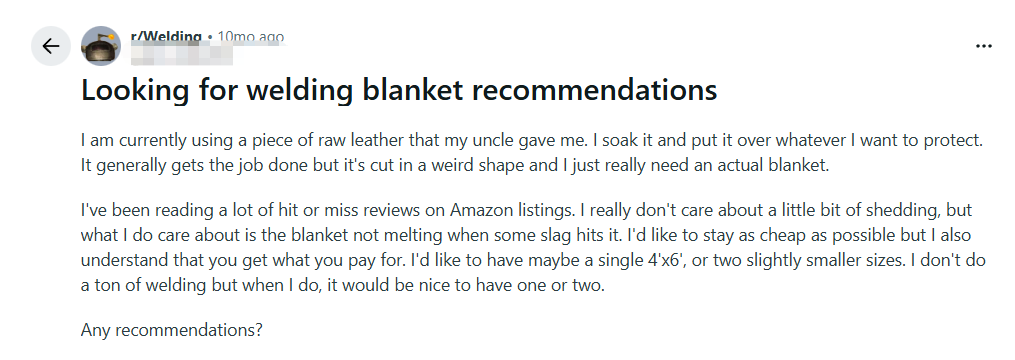
A: This is a common question, especially if you’re not familiar with welding blankets. Here are some tips from SUNTEX on how to choose the right one:
1. Check Your Welding Duty: Determine if your work is light, medium, or heavy duty. Choose a thicker blanket if you have a lot of sparks and slag.
2. Size Matters: Pick a size based on your project. It’s good to follow the 1.2x rule, which means choosing a blanket that is 1.2 times larger than the area you want to protect.
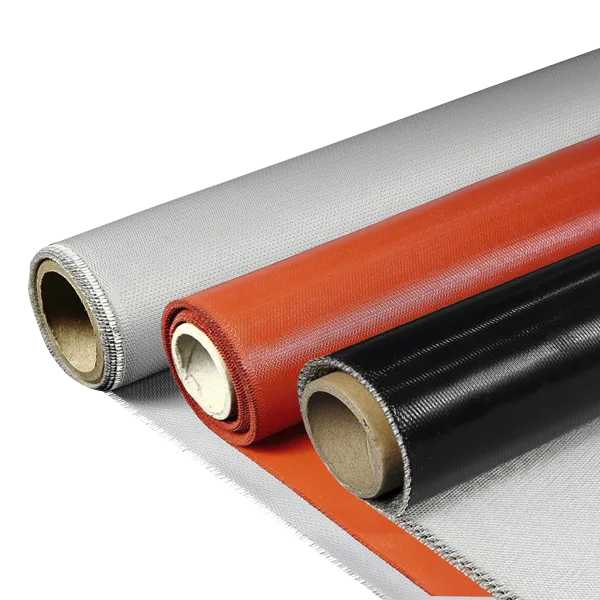
3. Material Choice: You mentioned using leather, but remember that leather is flammable. Fiberglass or silica fabric is fire-resistant. If safety is a top priority, go for a fiberglass or silica blanket.
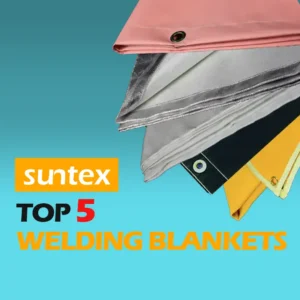
4. Look for Recommendations: Check out SUNTEX’s welding blanket category or read Top 5 Welding Blankets You Must Know (Fireproof, Heat-Rated, Durable)
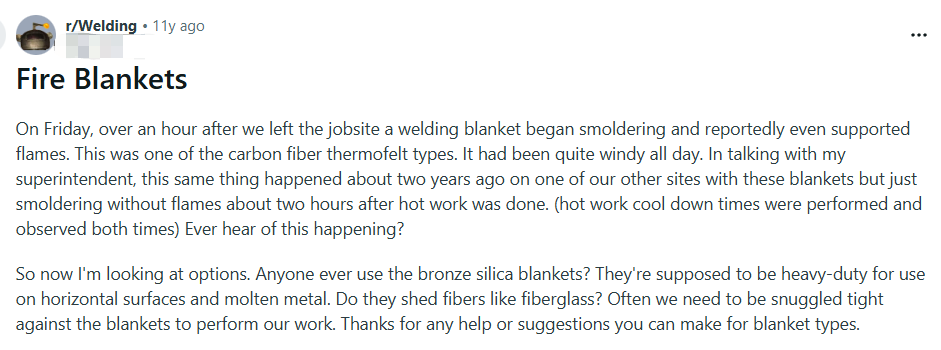
A: Sure, this can happen with carbon-fiber thermofelt welding blankets, and your experience isn’t as unusual as it sounds. Although these blankets feel soft, skin-friendly, and flexible, the material is essentially a high-temperature carbonized synthetic fiber — and it is still a combustible material. Under the right conditions of residual heat, oxygen flow, and trapped sparks (especially on a windy day), carbon felt can continue to smolder long after the hot work is finished. In some cases, it can even flare up, exactly like what you observed.
If your welding work produces heavy sparks, molten spatter, or prolonged radiant heat, it’s safer to use fiberglass or silica-based welding blankets, which are inherently non-combustible and much more stable under continuous heat exposure.
If comfort is a concern. For example, when welders need to work tightly against the blanket, consider using silicone-coated fiberglass/silica blankets. The coating reduces itch, improves flexibility, prevents fiber shedding, and adds extra resistance to molten metal. This gives you far better fire protection than carbon felt while still being comfortable enough for close-contact work.
I am going to guess that Fiberglass and Felt materials are “out” due to the walking. So that leaves Silicone coated fiberglass and cowhide, I think.
Any thoughts or recommendations on what to use?
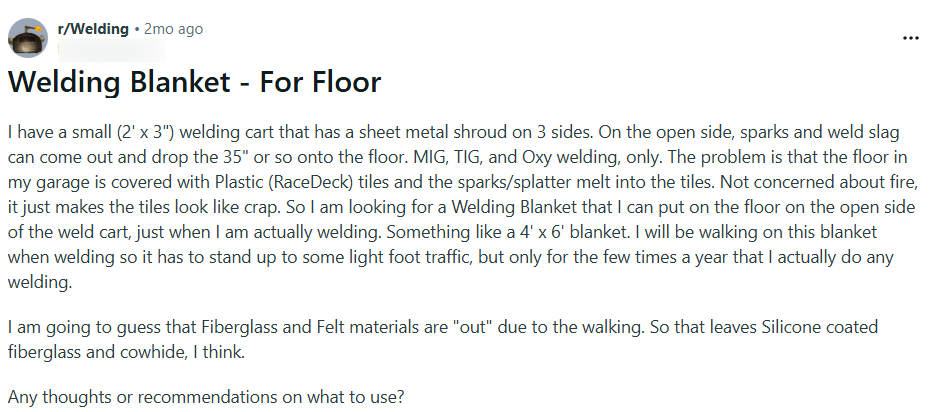
A: Based on the description, your welding blanket really needs to solve two problems:
catch sparks and hot slag without burning through, and
handle light foot traffic with good traction and easy cleanup.
For this kind of application, a silica-fabric welding blanket coated with silicone rubber is an ideal choice. The silica base cloth handles extreme heat (over 1000 °C), easily stopping MIG/TIG/oxy slag from damaging your RaceDeck tiles. The silicone coating adds a lot of practical benefits — anti-slip, abrasion resistance, oil and dirt resistance, plus a soft, flexible surface that holds up well when walked on. Silicone rubber itself tolerates temperatures above 250 °C, so the coating won’t degrade during typical welding tasks.
A blanket made from SUNTEX-1160 fits your needs perfectly. It provides high-temperature protection, durability for occasional foot traffic, and a surface that’s easy to clean after welding.
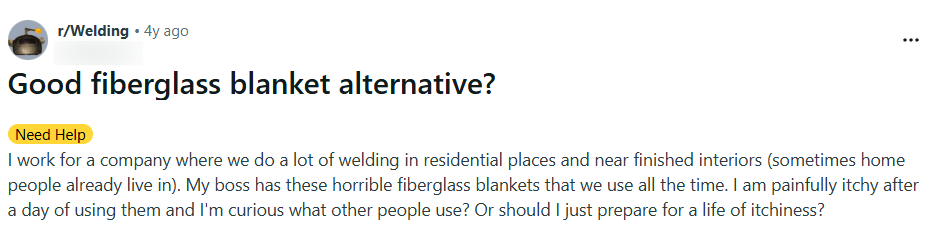
Here are some suggestions:
1. Choose Heavy Silicone Coated Blankets: These have a strong silicone layer that keeps the fiberglass in place and prevents it from getting on your skin. for example: silicone coated fiberglass welding blanket, Suntex-1155.
2. Consider Leather or Carbon Fiber Blankets: If your welding work doesn’t require high fire ratings or doesn’t produce a lot of hot slag, these materials can be more comfortable and won’t irritate your skin.
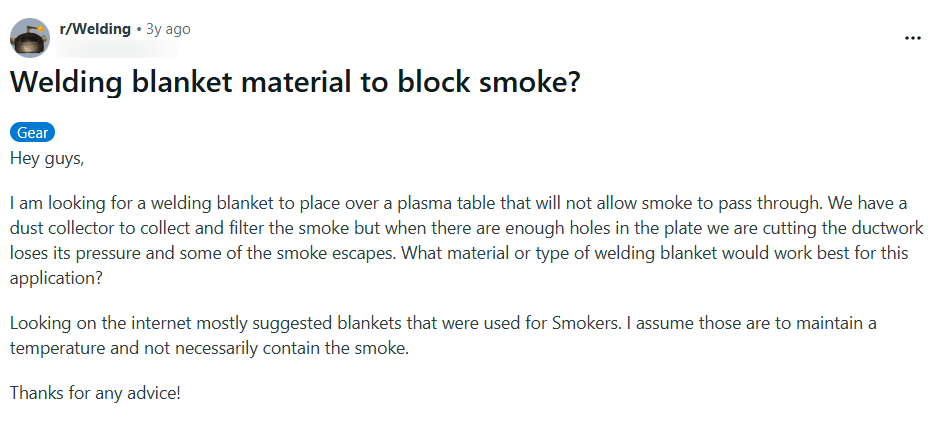
Here are some recommendations based on smoke levels:
1. Lightweight Silicone Coated Blanket: If the temperatures aren’t very high, consider a lightweight silicone coating blanket, like the Suntex-1174.
2. Heavy Duty Option: For more complex conditions or higher temperatures, go with a heavy-duty silicone-coated fiberglass blanket, such as the Suntex-1155. You may also consider a silica welding blanket, like the Suntex-1160, for added protection.
Other FAQ / Blogs / News >>