The Best JIS A-Class Welding Fire Blankets for Japanese Factory Safety
Read More >>
How to go to Suntex?
Why is Suntex a reliable supplier?
Besides competitive prices, what else can Suntex provide?
What are Suntex's products?
Looking for any help?
Diesel generators are the backbone of backup power systems across industries, from manufacturing plants and data centers to hospitals and remote construction sites. Their ability to deliver reliable power when the grid fails is non-negotiable—but this reliability hinges on proper maintenance and protection. One critical yet often overlooked component of diesel generator care is the insulation cover. In this blog, we’ll dive into why thermal insulation matters for diesel generators, the science behind their heat production, and most importantly, the materials that make effective insulation covers. We’ll also explore where to apply insulation and the unexpected benefits it brings beyond just safety.
Diesel generators are essential sources of backup and continuous power for industrial facilities, hospitals, data centers, and remote sites. However, while they provide reliable energy, they also generate significant heat during operation. Without proper thermal insulation, this heat can cause safety risks, equipment damage, and energy inefficiency.
Let’s explore why insulating your diesel generator is so important — and what materials are typically used to keep it safe and efficient.
A diesel generator works by converting the chemical energy of diesel fuel into mechanical energy (via combustion in the engine) and then into electrical energy (through the alternator). During this process, a large amount of heat is released, especially in the engine and exhaust system.
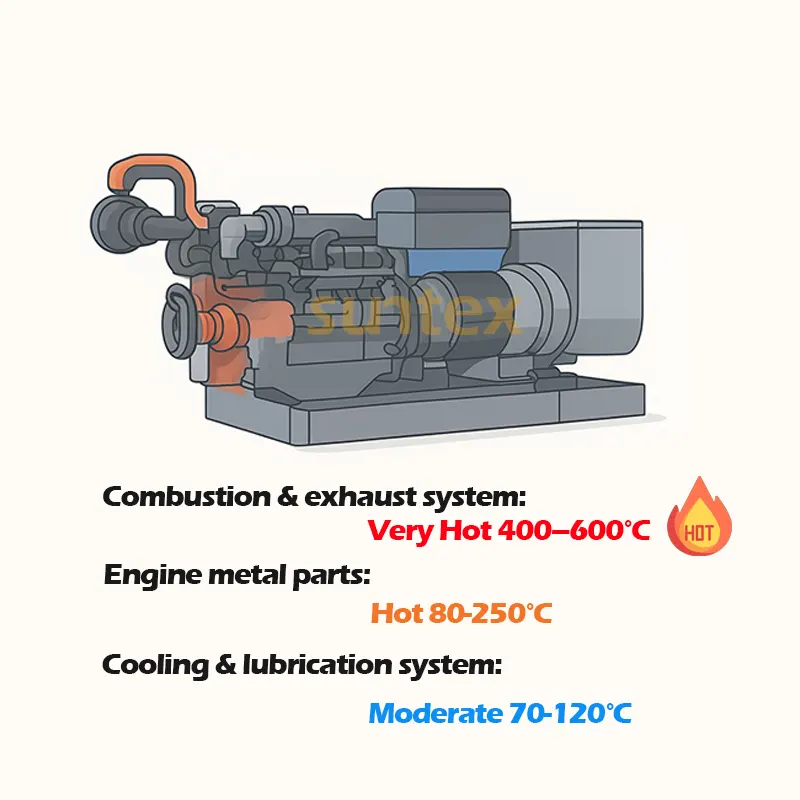
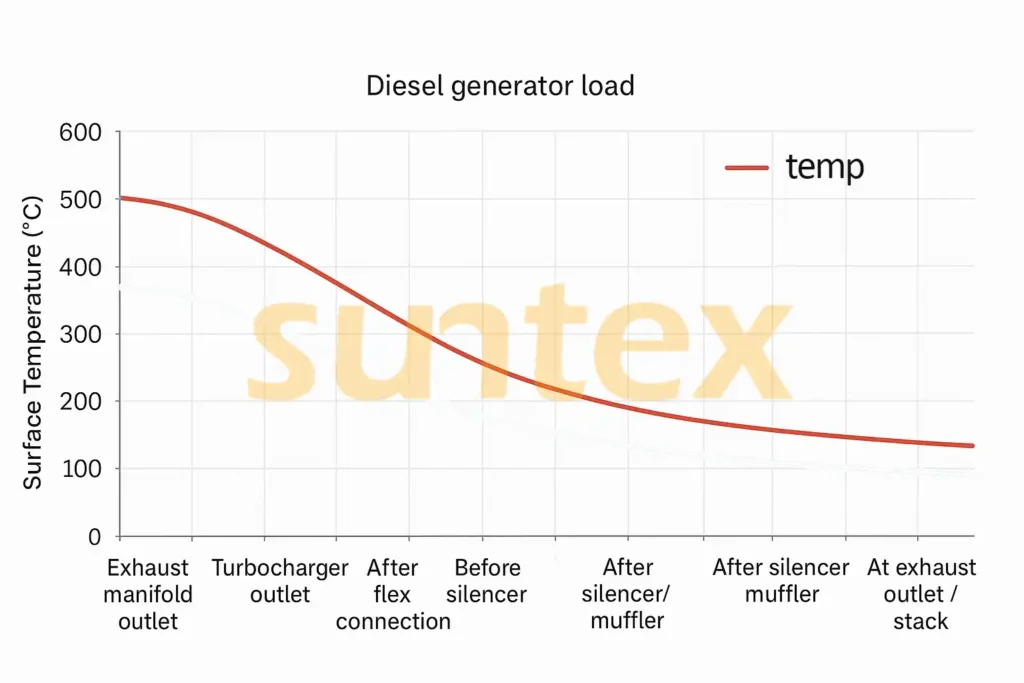
Typical temperature ranges of key generator parts are:
| Component | Typical Temperature (°C) | Notes |
|---|---|---|
| Exhaust manifold | 350 – 650°C | Directly after combustion; very hot surface. |
| Turbocharger (turbine side) | 400 – 550°C | Driven by exhaust gases; intense heat. |
| Exhaust piping (before silencer) | 300 – 450°C | Hot gases move through piping. |
| Silencer / muffler surface | 150 – 250°C | Temperature drops after gas expansion. |
| Silencer/muffler surface | 80 – 110°C | Maintained by cooling system. |
| Alternator housing | 60 – 90°C | Maintained by the cooling system. |
As you can see, the exhaust zone is the high-temperature zone, often exceeding 500°C. Without insulation, these parts radiate large amounts of heat into the surrounding space.
1. Personnel Safety
Exposed metal surfaces in the exhaust and turbo areas can reach 400–600°C, which can cause severe burns on contact. Insulating these components protects operators and maintenance personnel from injury.
2. Heat Control in Enclosed Spaces
Generator rooms, ships, and engine enclosures can easily overheat without insulation. Excessive radiant heat can raise ambient temperatures by 10–20°C, stressing the cooling system and electrical components.
3. Improved Efficiency
By retaining heat within the exhaust system, insulation helps maintain optimal exhaust gas temperatures, improving turbocharger performance and engine combustion efficiency.
4. Protection of Nearby Equipment
Nearby electrical wiring, sensors, and rubber hoses can degrade or melt if exposed to high radiant heat. Proper insulation prevents heat-related damage and premature component failure.
5. Noise Reduction
Insulation blankets not only trap heat but also help absorb noise, reducing overall sound levels from the exhaust and engine area.
Thermal insulation for diesel generators is usually made in removable insulation blankets or jackets that wrap around exhaust pipes, manifolds, and turbochargers. These covers must withstand high temperatures while being easy to install and remove for maintenance.
Here are the most common materials:
| Layer | Materials | Function | Ref. |
|---|---|---|---|
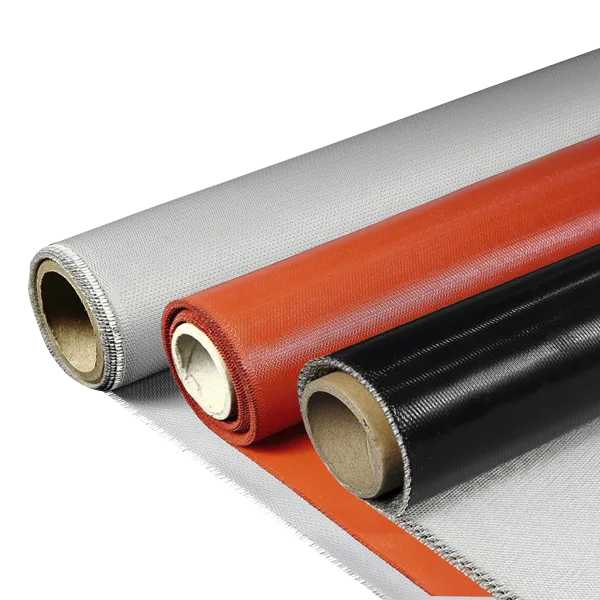
| Outer Layer (Protective Cover) | Silicone-coated fiberglass cloth, PTFE-coated fiberglass | Resists oil, moisture, and abrasion; provides durability. | Silicone fabrics: Suntex-1228, Suntex-1027, Suntex-1015; PTFE fabrics: Suntex-8003, Suntex-8006 |
| Middle Layer (Insulation Core) | High-temperature glass fiber mat, rock wool, or ceramic fiber blanket | Provides the main thermal barrier, rated for up to 1000°C. | N/A |
| Inner Layer (Heat-facing surface) | high-temp fiberglass cloth(with s.s. wire reinforced), silia fabric, Stainless steel mesh | Withstands direct contact with hot metal surfaces and vibration. | Suntex-5058, Suntex-5065, Suntex-5022 |
Insulation is typically used on:
Additionally, thermal blankets are often designed in sections, allowing for easy removal during maintenance while ensuring a snug fit to minimize heat leakage.
While safety and equipment protection are the primary benefits of insulation, there are several unexpected advantages that make it a smart investment:
Thermal insulation is a critical safety and efficiency measure for any diesel generator installation.
By insulating the exhaust manifold, turbocharger, and exhaust piping, you can:
Choosing the right high-temperature insulation materials, such as silicone-coated fiberglass and ceramic fiber blankets, ensures reliable operation even under the most demanding conditions.
Other FAQ / Blogs / News >>