Industry Insights: How the AI & Electronics Revolution is Reshaping the Supply Chain and Driving Upstream Fiberglass Yarn Costs
Read More >>
How to go to Suntex?
Why is Suntex a reliable supplier?
Besides competitive prices, what else can Suntex provide?
What are Suntex's products?
Looking for any help?
When selecting suitable materials for industrial fireproof insulation projects, we often face a dilemma: which is more appropriate, silicone-coated fiberglass fabric or PTFE-coated fiberglass fabric? Indeed, they have similar thickness, weight, color, and both are fire-resistant and heat-resistant. However, they possess different characteristics. Sometimes, silicone-coated fiberglass fabric is more suitable for certain applications, while at other times, PTFE fiberglass fabric is the better choice.
By understanding the properties of silicone and PTFE coatings, you can make an informed decision and choose the fiberglass fabric that best meets your requirements. Let’s explore the world of silicone and PTFE coatings to determine which is best for you. In this article, we will delve into the characteristics, advantages, and limitations of silicone and PTFE-coated fiberglass fabrics. We will discuss the benefits of each coating in different applications and provide valuable insights to help you select the right fabric for your specific needs.

To understand the similarities and differences between silicone-coated fiberglass fabric and PTFE-coated fiberglass fabric, it’s essential to know about their common base material: fiberglass fabric.
Fiberglass fabric is made by drawing glass into very fine strands, which gives the fibers excellent flexibility. These strands are spun into yarn and then woven into fabric using a loom. It offers excellent heat resistance, strength, and durability.
Why apply silicone or PTFE coatings to fiberglass fabric? These coatings give the fabric different properties, making it better suited for various industrial needs.
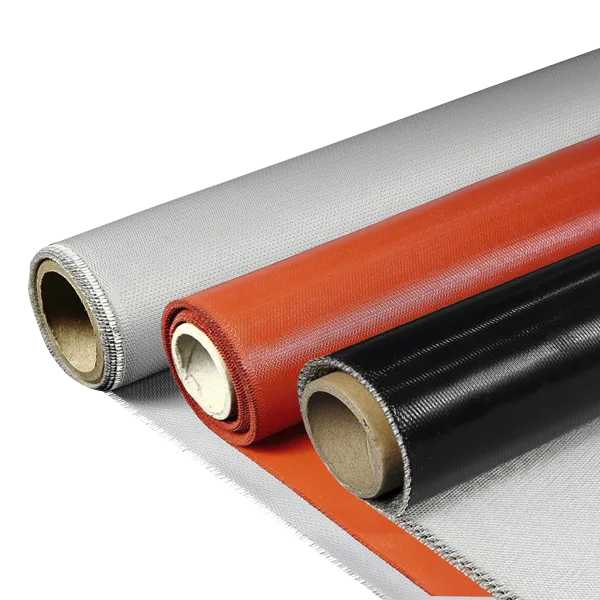
Silicone coated fiberglass fabric is a material where silicone is applied to fiberglass fabric. It combines fiberglass’s strength with silicone’s flexibility, offering excellent heat resistance, waterproofing, and chemical resistance. This material is commonly used in applications requiring high-temperature protection, such as welding shields, insulation covers, and fire curtains, due to its ability to withstand extreme temperatures and provide good electrical insulation.
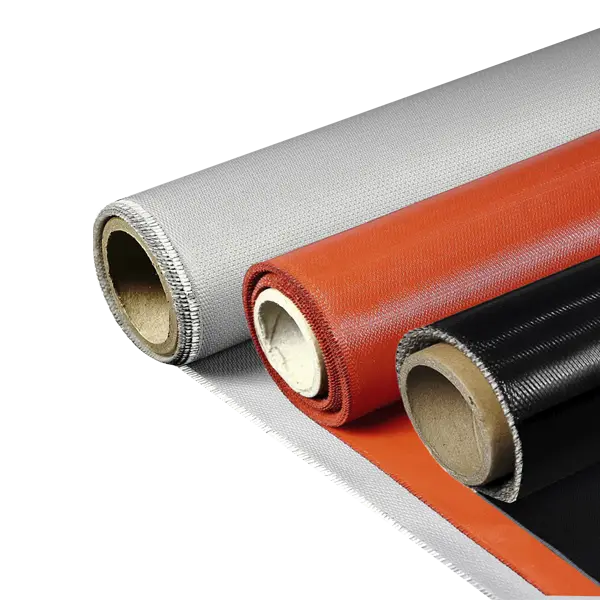
Let’s look at its main characteristics:
Understanding the properties of PTFE coated fiberglass fabric
PTFE coated fiberglass fabric is fiberglass fabric coated with polytetrafluoroethylene (PTFE), commonly known by the brand name Teflon®. It is renowned for its excellent heat resistance, non-stick properties, and chemical resistance. The PTFE coating provides a smooth surface that is easy to clean and offers superior electrical insulation. It is widely used in industrial applications requiring non-stick and chemical-resistant properties, such as insulation covers, fabric expansion joints, conveyor belts, gaskets, and high-temperature linings.
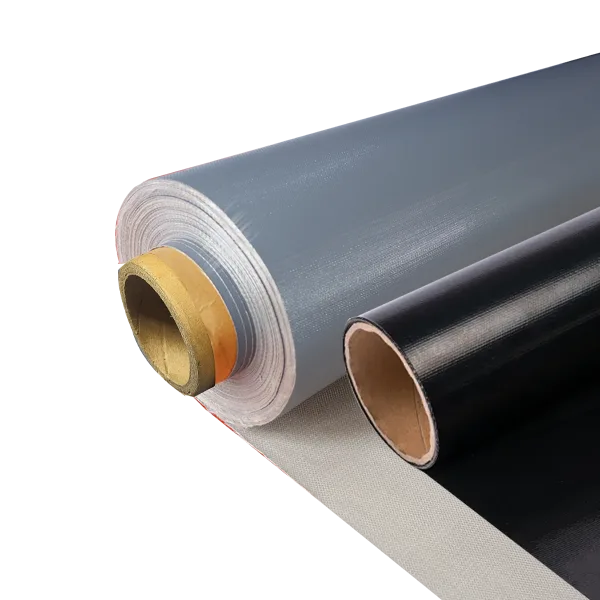
Below are the main characteristics:
The Key Differences of silicone and PTFE coated fiberglass fabric
| Feature | Silicone Coated Fiberglass | PTFE Coated Fiberglass |
| Flexibility | Excellent | Less Flexible |
| Non-Stick | Good | Exceptional |
| Chemical Resistance | Moderate | Excellent |
| Temperature Range | -73°C to 260°C (-100°F to 500°F) | -73°C to 300°C (-100°F to 570°F) |
| Cost | Lower | Higher |
| Primary Use Cases | Flexible applications, Thermal insulation covers, Fabric expansion joints, fire blankets | Non-stick applications, Thermal insulation covers, Fabric expansion joints, Conveyor |
| Fire retardancy | Better | Good |
In the industrial field, the need for fire resistance, high-temperature endurance, and vibration resistance requires silicone-coated fiberglass fabric and PTFE-coated fiberglass fabric. We will now analyze them in detail for thermal insulation covers, fabric expansion joints, and high-temperature gaskets.
Removable insulation covers, also known as industrial insulation jackets, are flexible thermal solutions typically made from high-temperature materials like silicone or PTFE coated fiberglass fabric. They are designed to wrap around pipes, valves, or equipment (as outer layer material of thermal insulaiton cover) to reduce heat loss, improve energy efficiency, and allow easy installation and removal for maintenance and inspection.
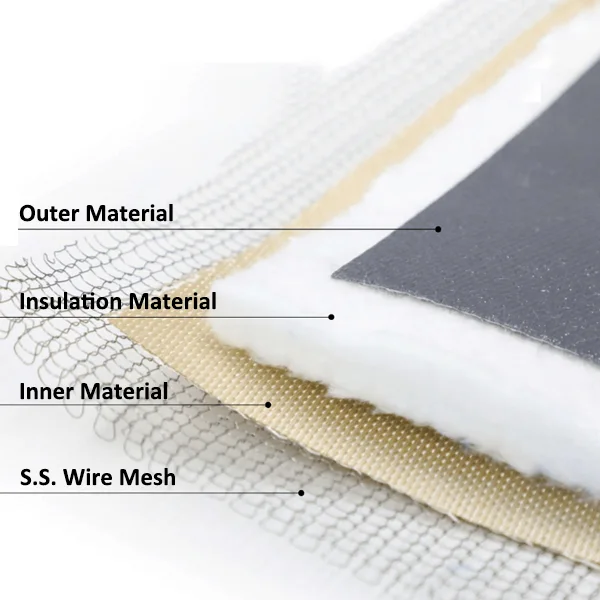
If your project does not involve a corrosive chemical environment, requires high fire resistance up to A2 level, and has a limited budget, using silicone coated fiberglass fabric for thermal insulation covers is more suitable.
If your project involves acidic or alkaline environments, or is used in ATEX settings, and requires frequent cleaning and maintenance, PTFE coated fiberglass fabric for thermal insulation covers would be more appropriate.
Fabric expansion joints are flexible connectors used to absorb thermal expansion, vibration, and movement in piping or equipment systems. They are typically made from high-temperature and chemically resistant materials like silicone or PTFE coated fiberglass fabric. These joints provide flexibility in industrial applications, protecting systems from stress while ensuring sealing performance and durability.
Silicone coated fiberglass fabric is often used as the outer cover for fabric expansion joints, protecting the internal materials and preventing high-temperature gases from leaking out. However, it is not suitable for highly acidic or alkaline chemical environments.
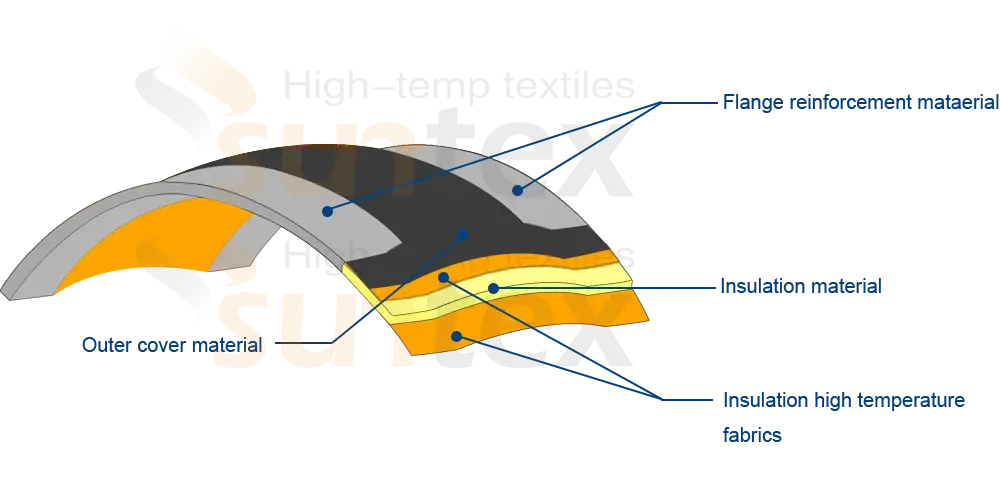
Therefore, in environments like desulfurization towers with sulfur-containing high-temperature flue gases or other corrosive settings, PTFE fiberglass fabric is commonly used for fabric expansion joints. It can serve not only as the outer cover material but also as the gas seal layer.
Industrial thermal sealing gaskets are components used to provide seals in high-temperature environments, preventing fluid or gas leaks. They are made from heat-resistant materials like PTFE or silicone coated fiberglass fabric, capable of withstanding extreme temperatures and chemical corrosion. These gaskets are widely used in industries such as chemical, petroleum, and food processing for sealing pipes, valves, and equipment connections.
Silicone-coated fiberglass fabric is used for making industrial thermal sealing gaskets, primarily in high-temperature environments. It offers better elasticity than PTFE fiberglass fabric and is more cost-effective.
PTFE fiberglass fabric has excellent high-temperature resistance, chemical corrosion resistance, and low friction properties, making it ideal for providing reliable sealing in harsh environments. It is widely used in industrial thermal sealing, especially in chemically corrosive settings.
If you’re unsure about which material to choose, please contact Suntex’s sales manager, Mr. Jason, at [email protected]. Suntex will provide professional advice based on your industrial application and environment.
Suntex is a leading manufacturer of high-temperature industrial fabrics with over 20 years of experience. We provide high-quality materials to a wide range of industrial clients, including Siemens, Alstom, Samsung, and Marubeni.
In conclusion, choosing between silicone and PTFE coated fiberglass fabric depends on your specific application needs. Silicone-coated fiberglass offers excellent flexibility, weather resistance, and moderate temperature tolerance, making it ideal for applications like insulation covers and protective barriers. On the other hand, PTFE-coated fiberglass excels in high-temperature and chemically aggressive environments due to its superior heat resistance and chemical inertness, making it suitable for demanding industrial applications. By understanding the unique properties and advantages of each material, you can make an informed decision that best suits your operational requirements.v
Other FAQ / Blogs / News >>