Industry Insights: How the AI & Electronics Revolution is Reshaping the Supply Chain and Driving Upstream Fiberglass Yarn Costs
Read More >>
How to go to Suntex?
Why is Suntex a reliable supplier?
Besides competitive prices, what else can Suntex provide?
What are Suntex's products?
Looking for any help?
This blog is intended to be a handy guidebook focusing on the materials for removable insulation blankets. Whether you’re dealing with various industrial settings or specific operational scenarios, you’ll find detailed instructions here on how to make the right choices regarding materials to ensure optimal performance of these blankets.
Removable insulation blankets are designed to provide thermal insulation and can be easily installed and removed as needed. They are widely used in multiple fields. In the oil and gas industry, they are applied to insulate pipelines and storage tanks in refineries to minimize heat loss and enhance energy conservation. In manufacturing plants, they cover machinery and equipment to maintain stable working temperatures. In the food and beverage sector, they help control the temperature of processing equipment. They are also commonly used in power generation facilities to improve the efficiency of heat management for boilers and turbines.
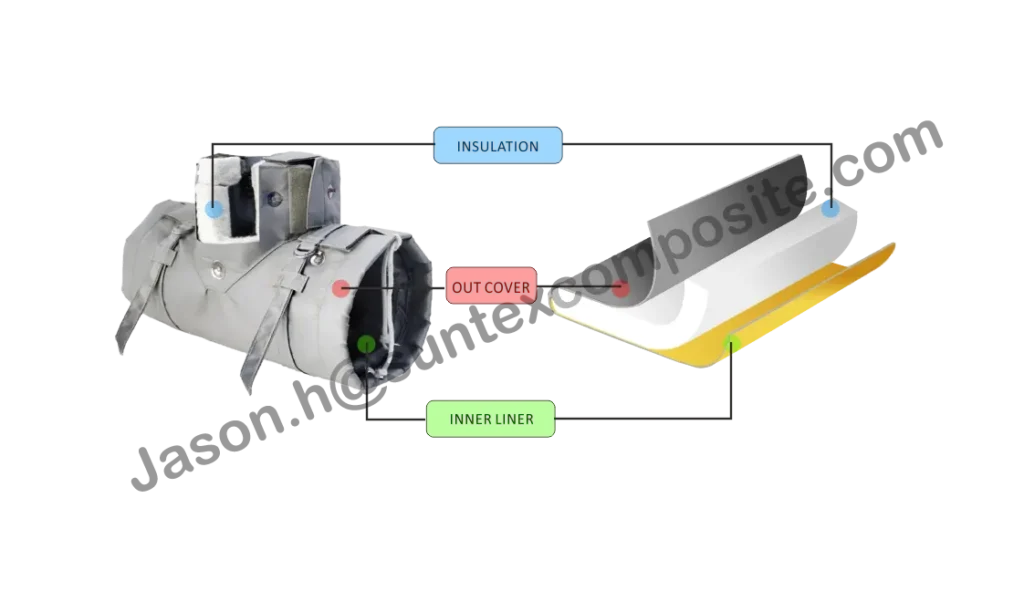
The outer cover serves as the first line of defense against external elements like dirt, moisture, and physical abrasion. It safeguards the inner components and gives the blanket durability. The inner liner creates a smooth interface with the object being insulated, facilitating better heat reflection and preventing any damage to the item. The insulation material in the middle is crucial as it reduces heat transfer effectively, keeping the heat where it should be or blocking unwanted heat from outside. The fastening system, which could be straps, hooks, or other fastening devices, ensures that the blanket stays firmly attached to the equipment, enabling it to function properly during operation.
When it comes to choosing materials for removable insulation blankets, numerous factors need to be taken into account. In the following sections, we will analyze how to select materials based on the different structural components of the blankets.
| Component | Material Name | Temperature Range |
|---|---|---|
| Outer Cover | Silicone coated fiberglass fabric (Suntex-SI) | -55°C ~ 230°C/-67°F ~ 446°F |
| Outer Cover | PTFE impregnated fiberglass fabric (Suntex-PTFE) | -73°C ~ 315°C/-100°F ~ 600°F |
| Outer Cover | PU coated fiberglass fabric (Suntex-PU) | -40°C ~ 150°C/-40°F – 302°F |
| Outer Cover | Aluminum foil laminated fiberglass fabric (Suntex-AL) | -50°C ~ 300°C/-58°F – 572°F |
| Inner Liner | Silicone coated fiberglass fabric (Suntex-SI) | ≤ 230°C/≤ 446°F |
| Inner Liner | Metal oxide fiberglass fabric (Suntex-5053) | ≤ 350°C/≤ 662°F |
| Inner Liner | PU coated fiberglass fabric with s.s. wire reinforced (Suntex-2040) | ≤ 450°C/≤ 842°F |
| Inner Liner | High temperature finished fiberglass fabric with s.s wire reinforced (Suntex-5058) | ≤ 750°C/≤ 1382°F |
| Inner Liner | Vermiculite coated silica fabric (Suntex-5022) | ≤ 980°C/≤ 1796°F |
| Insulation Layer | Fiberglass needle felt (fiberglass needle mat) | ≤ 650°C/≤ 1202°F |
| Insulation Layer | Ceramic blanket | ≤ 1250°C/≤ 2282°F |
| Insulation Layer | Silica needle felt (silica needle mat) | ≤ 1250°C/≤ 2282°F |
When selecting materials for the outer cover of removable insulation covers, it’s important to prioritize durability and environmental resistance. Choose materials that can withstand high temperatures and resist abrasion to ensure longevity. Consider weather resistance, especially if the covers will be exposed to outdoor elements, requiring UV and moisture protection. Additionally, evaluate the material’s chemical resistance if it will be used in environments with potential exposure to corrosive substances. Flexibility and ease of handling are also key factors to facilitate installation and removal.
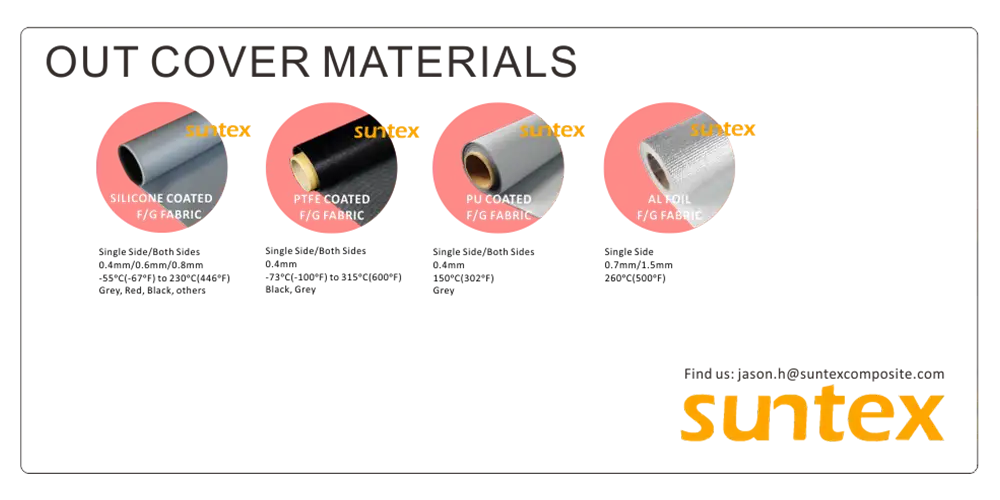
There are several common materials worthy of consideration.
One is the silicone coated fiberglass fabric. It combines the strength and heat resistance of fiberglass with the flexibility and protective properties of the silicone coating. Its continuous use temperature range is from around -55°C (which is approximately -67°F) to 230°C (about 446°F). It is available in several main thickness options including 0.2mm, 0.4mm, 0.6mm, 0.8mm, and 1mm. You can choose between single coating and double coatings. When it comes to color, there are standard options like grey, red, black, and orange, and it also supports custom colors to meet specific aesthetic or identification requirements in different working scenarios.
PTFE impregnated fiberglass fabric, also referred to as Teflon fiberglass fabric, is another option. It is renowned for its outstanding non-stick and chemical resistance properties. Its continuous working temperature range usually spans from approximately -73°C (-100°F) to 315°C (600°F). The main thickness available is 0.4mm, and it can be supplied with either single coating or double coatings. Moreover, it can have anti-static properties added as per specific requirements. This anti-static feature makes it suitable for use in ATEX areas, where there is a need to prevent the build-up of static electricity that could potentially lead to explosive atmospheres. In terms of color, the choices are grey, black, and white.
PU coated fiberglass fabric, is mainly selected for its great flexibility and durability. It has a relatively lower temperature tolerance with a continuous use temperature range of around -40°C (-40°F) to 150°C (302°F). The main thickness options are 0.4mm and 0.6mm. Color options include grey, black, and custom colors. It is primarily used in indoor environments and low-budget projects due to its cost-effectiveness and suitable performance within such settings.
The aluminum foil laminated fiberglass fabric has excellent heat reflection ability. It generally has a continuous use temperature range from around -50°C (-58°F) to 300°C (572°F). The main thickness options available are 0.7mm and 1.5mm. This material is particularly useful in leak prone areas as it can help in minimizing heat transfer and also provides an additional layer of protection in such critical zones where leaks might occur. It is a preferred choice in situations where minimizing heat loss or gain is a top priority, such as in some high-temperature industrial processes or in storage facilities where temperature control is crucial.
When choosing materials for the inner liner of removable insulation blankets, consider several key principles. The material must withstand high temperatures, offering excellent thermal insulation to minimize heat loss. Durability is crucial, as the liner should endure frequent handling and resist wear and tear. It should also provide chemical and moisture resistance to protect against industrial chemicals and environmental conditions. Flexibility is important for easy installation and removal, while lightweight materials facilitate handling. Fire resistance is essential for safety, and cost-effectiveness ensures economic viability. Compatibility with other components of the insulation system is vital. The inner liner serves multiple functions: securing the insulation mat, acting as a fluid barrier, enhancing sound absorption, and providing mechanical protection against sharp objects and abrasion.
Based on the above selection principles, silicone coated fiberglass fabric, metal oxide fiberglass fabric, pu coated fiberglass fabric with s.s. wire reinforced, high temperature finished fiberglass with s.s. wire reinforced and vermiculite coated silica fabric can meet the requirements. The main differences among them lie in their applicable temperature ranges and their capabilities to cope with harsh working conditions.
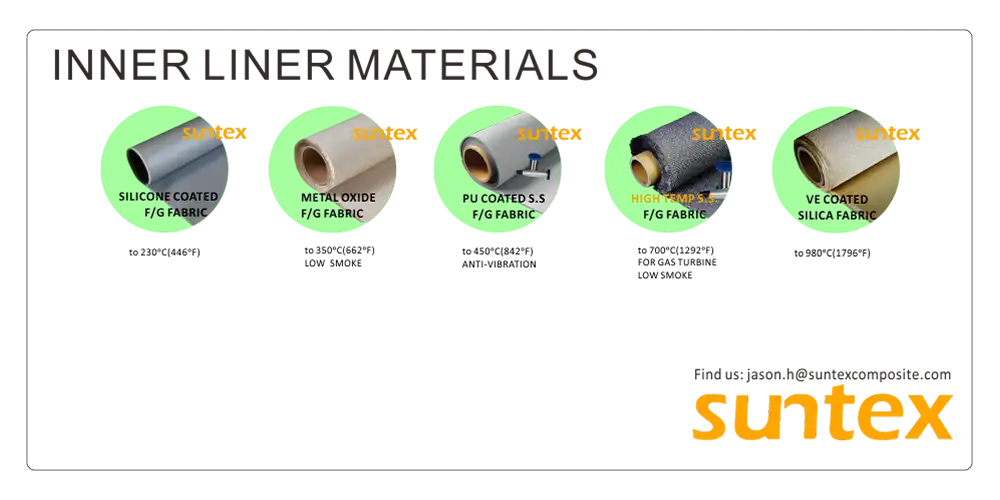
The main available thickness for this material is 0.4mm, and you can choose between single coating and double coatings. When used as an inner liner, it has several notable advantages. It combines the flexibility of fiberglass with the protective properties of the silicone coating, making it easy to handle during installation and removal. It also provides good chemical and moisture resistance, safeguarding the insulation system from potential damage caused by external substances. Its thermal insulation performance is reliable within its temperature range. The temperature range it can withstand is less than 230°C (about 446°F). This makes it suitable for applications where the temperature requirements are within this relatively lower range.
This fabric has a thickness of 1.0mm with a coating made of metal oxide materials through an impregnation process. As an inner liner material, it offers strong durability and excellent resistance to wear and tear, ensuring that it can endure frequent handling and maintain its integrity over time. It has good chemical resistance, protecting against various industrial chemicals that might be present in the working environment. Additionally, when this material is preheated, it generates low smoke, which is an important safety feature in many industrial settings. The recommended temperature for its use is not higher than 350°C (about 662°F). This temperature tolerance allows it to be applied in scenarios where the operating temperature is moderate to relatively high but still within this specified range.
With a thickness of 0.6mm, this fabric has unique characteristics. When used as an inner liner, its main advantage is its suitability for areas that require both thermal insulation and have to deal with numerous vibrations. The embedded stainless steel wire significantly enhances the strength and temperature resistance of the fabric. It can withstand temperatures not higher than 450°C (about 842°F). This combination of properties makes it a preferred choice for specific industrial settings where vibration is common and effective insulation is essential.
This fabric has a thickness of 1.4mm. Its base fabric is an ECR glass fiber cloth reinforced with steel wire, and the coating is a high-temperature-resistant material independently developed by Suntex. Its temperature range that it can endure is not higher than 750°C (about 1382°F). Due to its outstanding high-temperature resistance, low smoke generation when preheated, and its ability to function well under vibrating working conditions for a long time, it is widely used in the production of insulation jackets for steam turbines.
With a thickness of 1.3mm, this fabric also has its own set of advantages when used as an inner liner. It has excellent thermal insulation properties and can withstand relatively extremely high temperatures. The recommended temperature for its use is not higher than 980°C (about 1796°F). It provides reliable protection against heat transfer and is suitable for applications in high-temperature industrial environments where maintaining effective insulation under severe heat conditions is of utmost importance.
When selecting materials for the insulation filling of removable insulation blankets, prioritize excellent thermal performance to effectively minimize heat loss. Ensure the material can withstand the maximum temperatures of the application environment. Durability is crucial, allowing the insulation to resist wear and maintain performance over time. Choose materials that offer resistance to moisture and chemicals to protect against environmental exposure and industrial substances. Flexibility is important for easy installation and removal, while lightweight options improve handling and portability. Fire resistance is essential for safety, and cost-effectiveness helps balance performance with budget constraints. Lastly, ensure the material is compatible with other components of the insulation system to maintain overall functionality and integrity.
Based on the above selection principles, fiberglass needle felt (fiberglass needle mat), ceramic blanket, and silica needle felt (silica needle mat) can meet the requirements. The main differences among them lie in their applicable temperature ranges and their capabilities to cope with harsh working conditions.
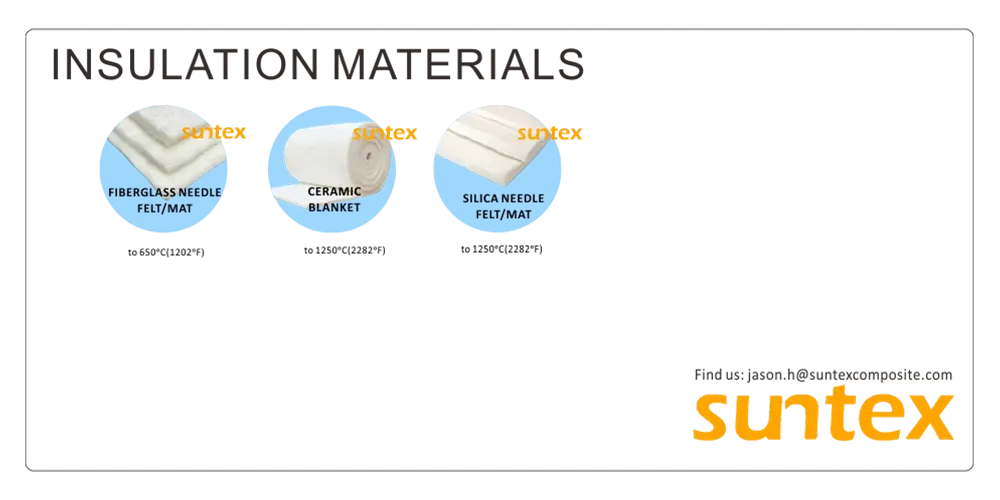
This material has several notable advantages when used for insulation. Firstly, it has relatively good flexibility, which enables it to conform well to different shapes and surfaces during installation, making it easier to fit into various equipment or structures that need insulation. It is also lightweight, facilitating handling and transportation when setting up or removing the insulation blankets. In terms of durability, it can maintain its insulation performance over time and resist normal wear and tear to a certain extent. Moreover, it offers some degree of resistance to moisture and common industrial chemicals. Its recommended temperature range is not higher than 650°C (about 1202°F). This makes it suitable for applications where the working temperature stays within this moderate range and provides effective heat insulation within such conditions.
Ceramic blanket brings a host of benefits for insulation purposes. It has outstanding thermal insulation properties and can withstand extremely high temperatures, with a recommended temperature not higher than 1250°C (about 2282°F). It is highly resistant to heat flow, effectively reducing heat loss and maintaining the desired temperature within the insulated area. Additionally, it has good chemical stability and can endure exposure to many harsh industrial substances.
However, it does have some drawbacks. For instance, it can be relatively brittle compared to some other insulation materials, which means it may require more careful handling during installation and removal to avoid cracking or breaking. Moreover, it may release fine fibers which pose a potential hazard to the respiratory system. Long-term exposure to these fibers could potentially lead to lung problems. This aspect needs to be carefully considered and appropriate protective measures should be taken when using ceramic blankets in industrial settings to safeguard the health of workers.
Silica needle felt has its own set of advantages when used in the insulation layer. It has excellent thermal insulation capabilities and can effectively block heat transfer, helping to maintain the desired temperature conditions. It is also relatively flexible, allowing for easy installation around different types of equipment. It shows good resistance to moisture and chemicals, safeguarding its insulation performance even in environments where there might be exposure to such elements. Its recommended temperature range is not higher than 1250°C (about 2282°F), which makes it a viable choice for high-temperature applications similar to those suitable for ceramic blankets, and it can provide reliable insulation in such demanding thermal conditions.
The fastening system of a removable insulation blanket includes several key components. D rings are often used for creating secure loops, while lacing anchors provide stable points for threading lacing wire or high-temperature rope, ensuring a tight fit. High-temp rope is utilized for its ability to withstand extreme conditions, maintaining the blanket’s position. Velcro strips offer quick and adjustable fastening, allowing for easy installation and removal. Additionally, other components like buckles, hooks, and clips may be included to enhance the system’s flexibility and reliability, ensuring the blanket stays firmly in place during operation.
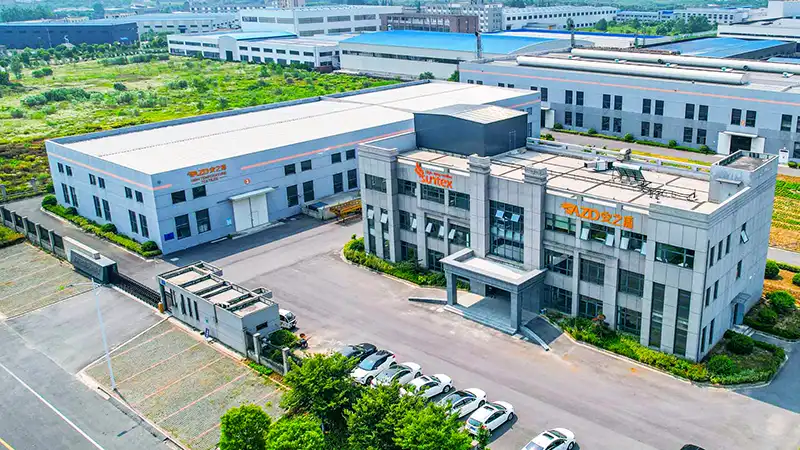
When searching for a supplier of materials for removable insulation blankets, it’s crucial to consider several key qualities that make a supplier stand out. Firstly, high-quality materials are essential to ensure the blankets perform effectively in various applications. Secondly, choosing a source factory is beneficial as it provides better control over production processes and costs. Thirdly, suppliers should offer competitive pricing to ensure excellent cost-effectiveness. Additionally, a comprehensive product range allows customers to find all necessary materials in one place. Lastly, fast delivery is vital to ensure projects proceed smoothly without delays.
Suntex Composite Industrial Co., Ltd is a supplier that meets all these requirements. As a leading manufacturer of high-temperature industrial textiles, founded in 2004, Suntex boasts high-precision production lines and an independent laboratory to guarantee product quality. Suntex provides a variety of materials for making removable insulation blankets, including components like the outer cover, inner liner, and insulation layer materials.
For any inquiries or requirements regarding these materials, contact Mr. Jason directly at [email protected]. With Suntex, you can trust in receiving high-quality materials for your removable insulation blanket projects.
Other FAQ / Blogs / News >>