Industry Insights: How the AI & Electronics Revolution is Reshaping the Supply Chain and Driving Upstream Fiberglass Yarn Costs
Read More >>
How to go to Suntex?
Why is Suntex a reliable supplier?
Besides competitive prices, what else can Suntex provide?
What are Suntex's products?
Looking for any help?
On July 17, the tech media NeoWin published a blog post reporting that scientists from Goethe University Frankfurt have developed a new type of catalyst that can decompose per- and polyfluoroalkyl substances (PFAS) without using expensive or toxic metals and can operate at room temperature.
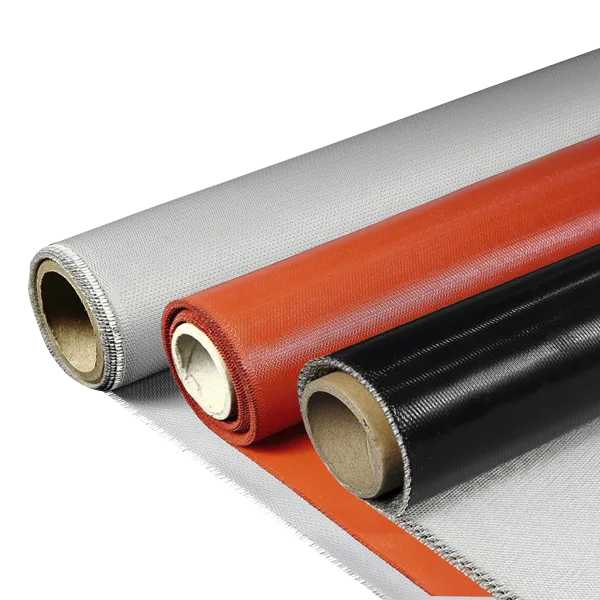
As we all know, PTFE-coated fiberglass fabric is an essential industrial insulation and fireproof material used in the petrochemical, thermal power, and LNG industries. It is also one of the main products of Suntex. However, the coating inevitably contains PFAS. Now, this new breakthrough offers hope in solving the PFAS problem. We sincerely celebrate this achievement and commend the scientists for their discovery.
PFAS is a class of man-made organic compounds known for their high chemical stability, thermal stability, and hydrophobic properties. They are widely used in both industrial applications and consumer products.
PFAS is not easily degradable and can persist in the environment for a long time, earning them the nickname “forever chemicals.” They can accumulate in living organisms and ecosystems.
The persistence of PFAS is primarily due to the carbon-fluorine (C-F) bond, which is one of the strongest chemical bonds and typically requires high temperatures or harsh chemicals to break.
The latest method developed by scientists does not use expensive or toxic metals like platinum or iridium. Instead, it utilizes a catalyst to break these bonds at room temperature.
The core of this catalyst is a boron-based structure known as 9,10-dihydro-9,10-diboraanthracene (DBA). When two electrons are added to DBA, it becomes active enough to attack PFAS molecules.
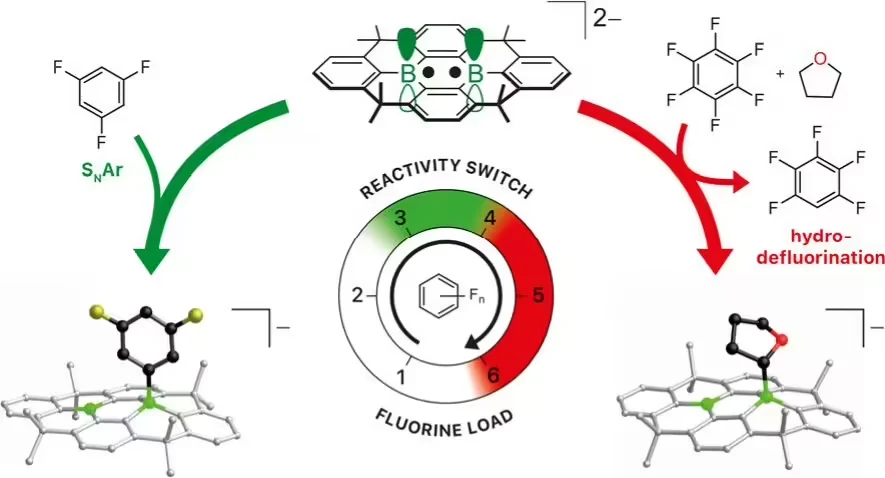
The research team tested fluorobenzene containing 1 to 6 fluorine atoms in a THF (tetrahydrofuran) solvent.
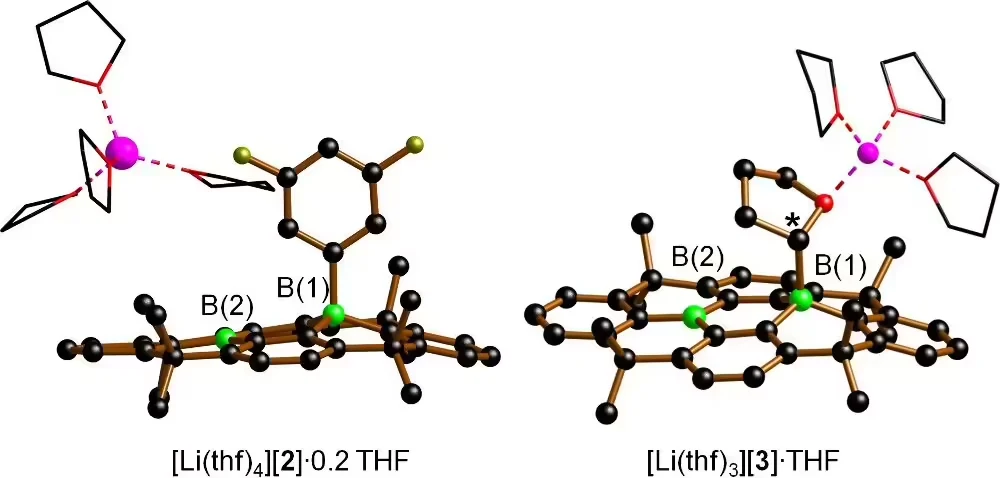
The research shows that the catalyst primarily operates in two ways: when there are fewer fluorine atoms, it acts like a boron-based nucleophilic reagent, assisting in breaking covalent bonds such as carbon-halogen (e.g., chlorine) through an SNAr-type reaction; when there are more fluorine atoms, it serves as a reducing agent, providing electrons and removing hydrogen atoms.
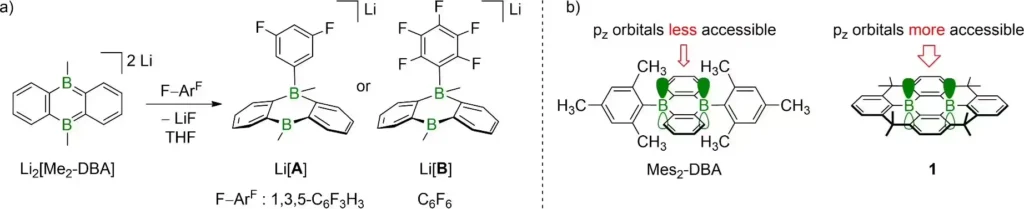
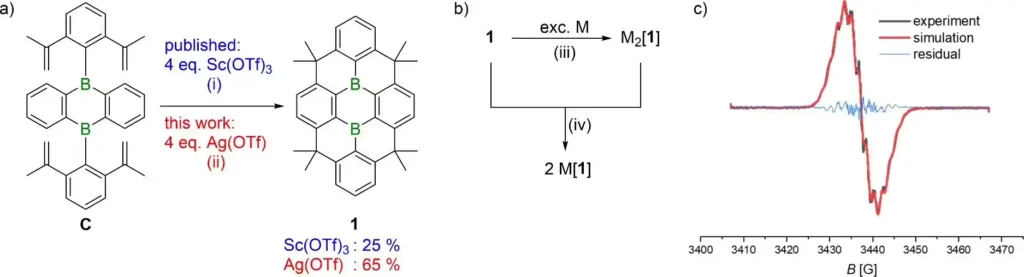
PhD student Christoph Buch said simply, “To break the C-F bond, we need electrons, and our catalyst can transfer electrons with extremely high efficiency. So far, we have been using alkali metals like lithium as electron sources, but we are exploring the use of electric current instead, which will make the process simpler and more efficient.”
The research team has also seen the potential of this technology for PFAS remediation. Many drugs contain fluorine to extend their duration or enhance their effectiveness. Professor Matthias Wagner explained, “With this catalyst, we now have a tool to precisely control the level of fluorination in these compounds.”
Reference:
Tag: PFAS
Other FAQ / Blogs / News >>