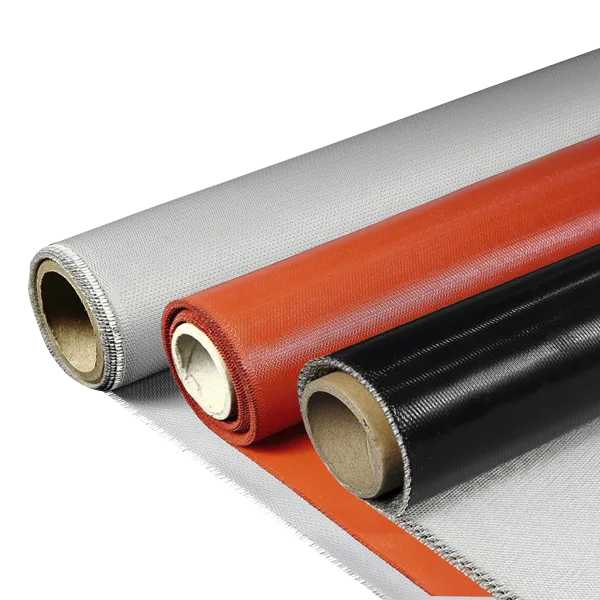
The Best JIS A-Class Welding Fire Blankets for Japanese Factory Safety
Read More >>
How to go to Suntex?
Why is Suntex a reliable supplier?
Besides competitive prices, what else can Suntex provide?
What are Suntex's products?
Looking for any help?
Ensuring fire safety in a building is crucial. To assess the effectiveness of barriers like curtains, doors, and glass in stopping fire spread, a fire classification system has been established. This system provides a universal standard, making it easier to determine if a product meets your building’s safety requirements, potentially saving lives.
The classifications are as follows: E (integrity), EW (integrity and radiation), and EI (integrity and insulation). Each is measured in minutes, indicating how long the product performs under specific test conditions. In this article, we explore how these classifications are determined and their practical implications.
Before understanding what E/I/W is, we must know which standards define E/I/W and the methods used to test them, in order to classify the fire protection devices’ rating.
The EN 13501-2 standard serves as the European benchmark for classifying construction elements based on their fire resistance. It applies to various products such as doors, windows, glazed partitions, curtains, and other fire-resistant barriers, assessing their capabilities to contain flames, restrict heat flow, and prevent the release of toxic smoke.
The EN 13501-2 standard relies on three key criteria:
EN 1634-1 tests fire curtains to determine if they achieve E/W/I ratings, focusing on three main aspects: preparation before testing, the testing process, and the assessment criteria for rating.
Samples must undergo pre-treatment in accordance with the requirements of EN 1363-1. Details for the treatment of support structures should refer to Annex A of the standard. For instance, certain grouting or sealing materials may require a curing period of 7 or 28 days. Additionally, the fire curtain product must complete necessary mechanical adjustments to ensure it is in optimal working condition.
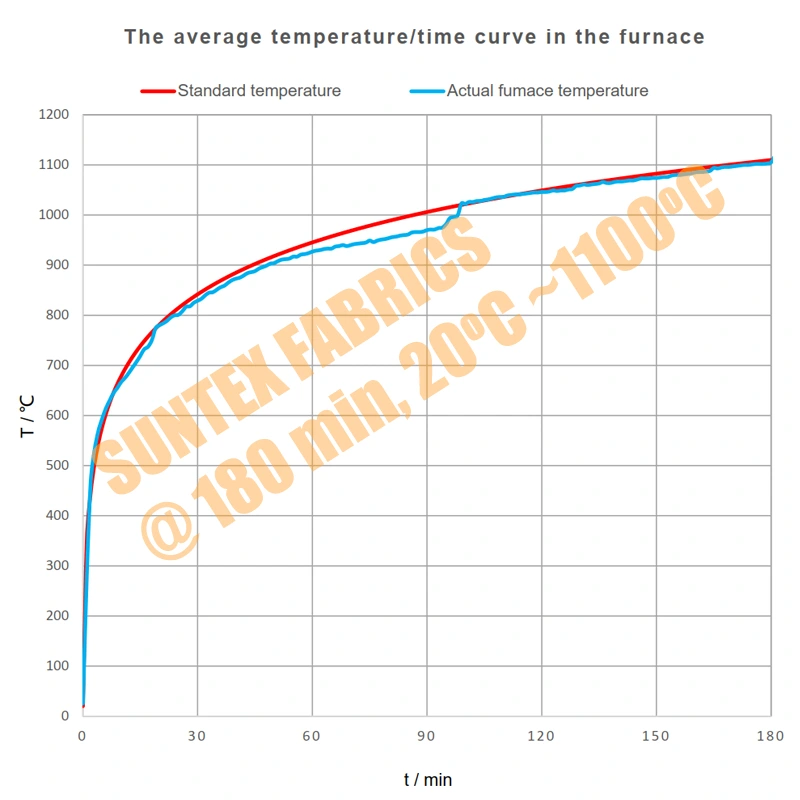
The fire resistance test is conducted according to the standard temperature rise curve specified in EN 1363-1 (T=345 log₁₀(8t + 1) + 20), simulating the entire development process of a fire from its initial stages to flashover. The sample is installed on a support structure that complies with regulated types, and the installation method should mimic actual usage as closely as possible to ensure the test results are representative and applicable to engineering.
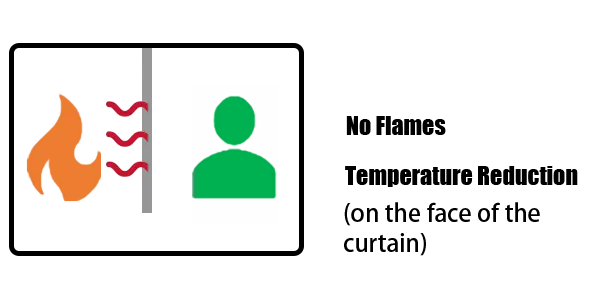
The E classification, or integrity rating, is the most common fire classification. It measures how well a barrier, like a fire curtain, door, or shutter, can prevent flames from passing through when exposed to fire on one side.
During testing, one side of the product is heated to over 1000°C using a furnace, following a standardized heating method (such as BS EN 1363-1). The test evaluates three criteria to determine if flames penetrate the barrier:
The test concludes when any of these occur, or the manufacturer may end it earlier if the product meets the desired performance level. The result is given as EXXX, where XXX indicates the duration in minutes.
It’s important to note that integrity tests do not measure heat transfer through the product; this is assessed by other classifications.
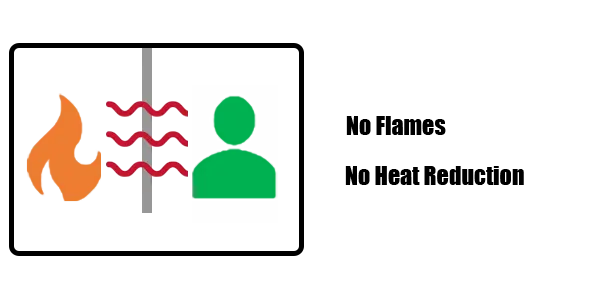
In the EW rating, besides assessing integrity, the product’s ability to limit heat radiation from the unexposed side is also evaluated. This is crucial for ensuring safe conditions, allowing people time to evacuate a building.
During testing, two heat flux meters are positioned 1 meter from the unexposed side to measure the thermal energy radiated over a specific area and time. One meter is centered on the product to obtain an average reading, while the other measures the maximum likely heat flux.
The test ends when either the integrity fails or the heat flux exceeds 15 kW/m², whichever occurs first.
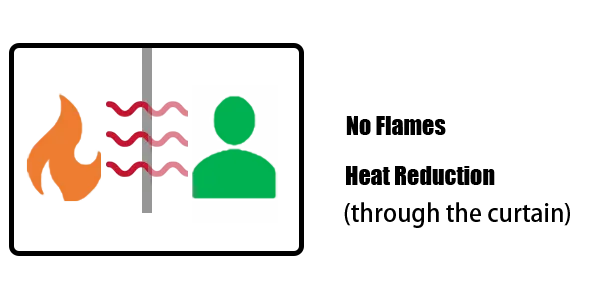
The EI rating is the highest classification level for fire curtains. It evaluates both fire integrity and the product’s ability to resist heat conduction to the unexposed side. This is crucial for protecting people and preventing nearby materials from igniting.
The insulation aspect measures the time it takes for the unexposed surface to reach 140°C above its initial temperature. The test concludes when this temperature is reached or when integrity fails, whichever comes first.
1. Definition
2. Performance Criteria
3. Applications
An EI classification is by no means random. It indicates the duration a product can sustain both its integrity and insulation when exposed to standard fire conditions. Take EI60 as an instance: it signifies that a component is capable of resisting fire and heat for 60 minutes, with this performance having been confirmed through strict laboratory testing.
An EI30 rating offers 30 minutes of fire resistance. As the minimum standard specified by most fire safety regulations, it applies to internal components in residential buildings and small-scale commercial premises. The purpose of this rating is straightforward: to contain fires for a sufficient duration to enable safe evacuation and early firefighting intervention.
An EI60 rating delivers twice the level of fire protection compared to lower grades like EI30. This classification is indispensable for multi-storey structures, public corridors, and all buildings with a large number of occupants. In numerous instances, it is mandated by Building Regulations—this is especially true for protected escape routes in buildings that exceed 11 meters in height.
EI90 is not intended for light-duty applications. Instead, it is designed for high-risk environments—such as locations where volatile materials are handled, areas with concentrated critical infrastructure, or sites where asset loss would result in catastrophic consequences.
The EI120 rating represents the highest level of fire resistance utilized in both public and residential buildings. It provides certified protection for up to 120 minutes in extreme fire conditions. This rating is not merely a matter of choice; it is essential for systems that are critical to life safety.
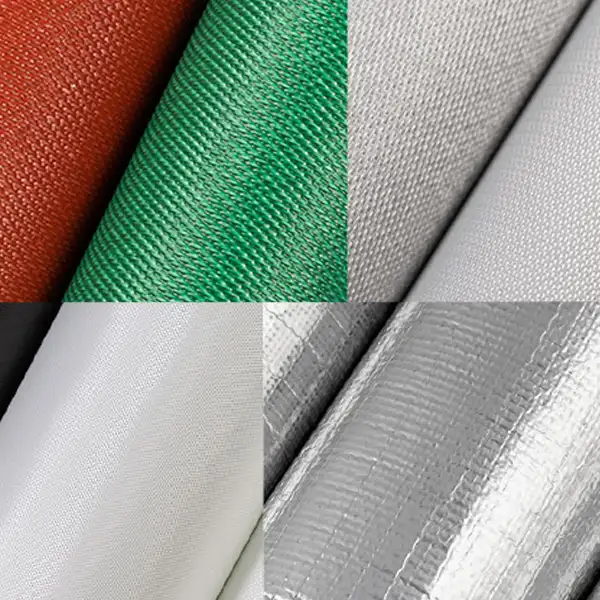
As a leading manufacturer of fire-resistant and high-temperature textiles, Suntex offers a range of fireproof materials for making fire curtains. These materials include
| Suntex High Temperature Fabrics | Recommended Rating | Remark |
|---|---|---|
| PU coated fiberglass fabric, Suntex-2005 | Smoke Curtain (D) | Suitable for Fixed Smoke Curtains or Movable Smoke Curtains. |
| PU coated fiberglass fabric with S.S. wire (V4A) reinforced, Suntex-2036(0.55mm), Suntex-2112(0.45mm), Suntex-2129(0.75mm) | Fire Curtain (E, or as part of EI) | Suntex offers materials in various thicknesses and strengths to meet diverse requirements. |
| Aluminum foil laminated fiberglass fabric with S.S. wire (V4A) reinforced, Suntex-6025 | Fire Curtain (EW) | Both sides are laminated, V4A wire significantly enhances the strength of this product. |
| Intumescent graphite coated fiberglass fabric with S.S. wire (V4A) reinforced Suntex-5048 | Fire Curtain (as part of EI) | When exposed to heat, intumescent graphite can expand rapidly, increasing the space between the layers of cloth and thereby enhancing the temperature resistance. |
| Aluminum foil laminated fiberglass fabric | Fire Curtain (as part of EI) | As an insulation layer for thermal radiation. |
| Silica fabric or Silicone coated silica fabric | Fire Curtain (as part of EI) | In some countries or regions, silica fabric or silicone-coated silica fabric is more preferred as the material for EI-rated fire curtains. |
Note: Suntex can provide various fireproof fabrics for different grades of smoke curtains or fire curtains. However, we do not provide technical assistance or design methods for manufacturing fire curtains.
To learn more about smoke & fire curtain fabrics, click ⬇.

| Test Requested | EN 1363-1: 2020Fireresistancetests. Part 1: General requirements EN1364-1: 2015Fireresistancetestsfornon-loadbearingelements. Part 1: Walls |
| Test Results | According to the test results, the submitted sample’s fire resistance performance as follows: Integrity: ≥ 180 min. |
| Conclusion | According to the test results, the submitted sample meets the requirement of fire integrity for 3 h. |
| Test Items | Performance Criteria | Results |
| A specimen is considered to have lost its integrity if any of the following specific circumstances occur to it: | ||
| Integrity | a) When sustained flaming for not less than 10s on the unexposed surface occurs; b) Flames and/or hot gases cause flaming or glowing of the cotton pad; c) The 6 mm diameter gauge can penetrate through gaps such that the end of the gauge projects into the furnace and the gauge can be moved in the gap for a distance of at least 150 mm; d) The 25 mm diameter gap gauge can penetrate through the gap such that the end of the gauge projects into the furnace; | 180min, Suntex fireproof fabric kept the Integrity performance. |
Statement
The results only relate to the behaviour of the specimen of the element of construction under the particular conditions of the test. They are not intended to be the sole criteria for assessing the potential fire performance of the element in use nor do they reflect the actual behaviour in fires.
The test results relate only to the specimen tested. The fire resistance performance of specimen of this design may change if different dimensions, different gaps, incorporating different components, or mounted within different wall constructions.
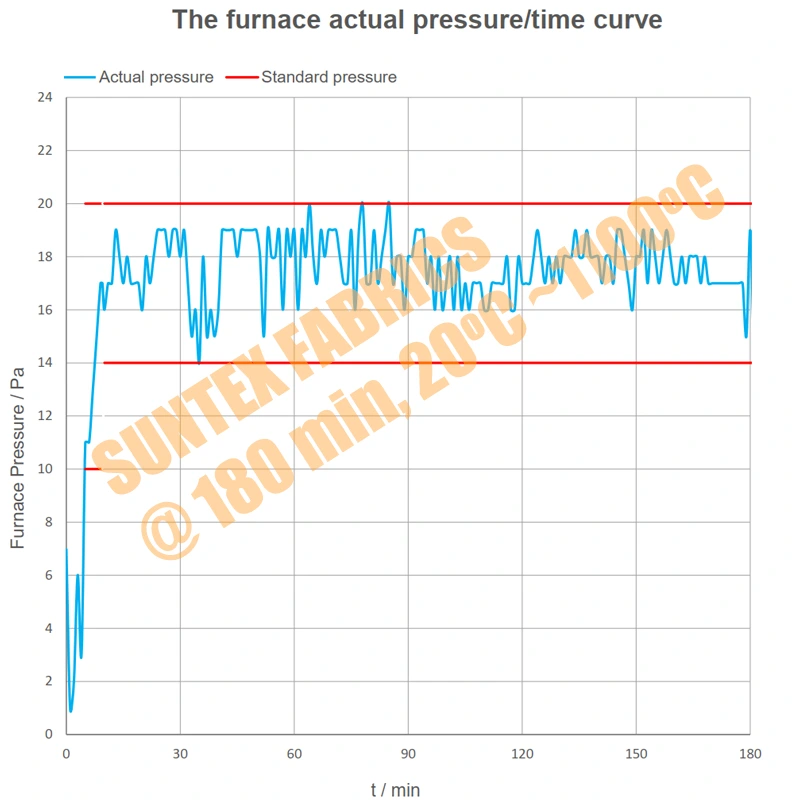
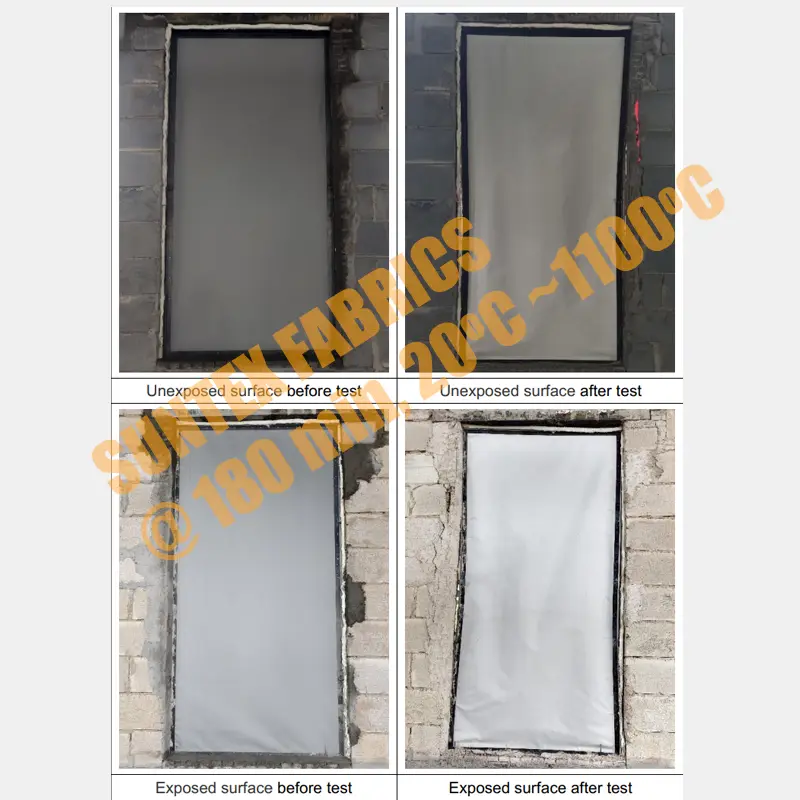
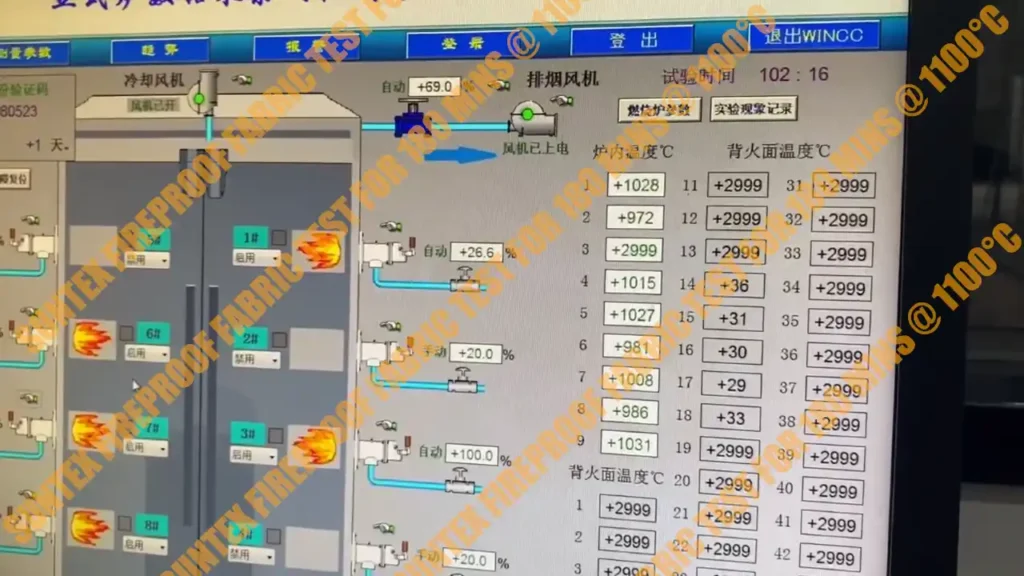
The following data were collected during the test:
a) The average temperature/time curve in the furnace, see attached Figure 1.
b) The furnace actual pressure/time curve, see attached Figure 2.
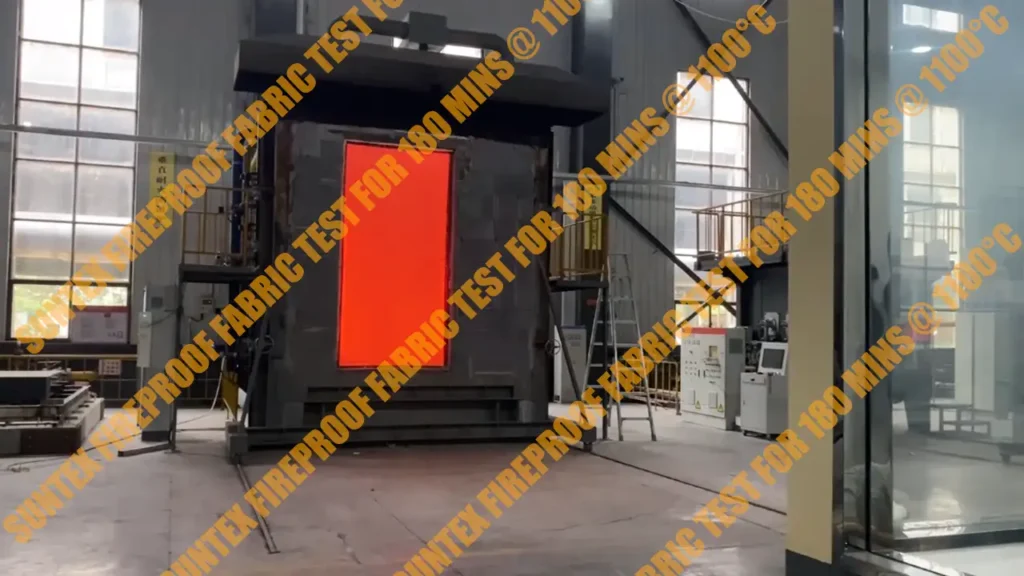
c) Suntex fireproof fabric test @180min 1100C for fire curtains. Before/After test, see Figure 3.
Gallery of Suntex Fabric Fire Test
Other FAQ / Blogs / News >>