Industry Insights: How the AI & Electronics Revolution is Reshaping the Supply Chain and Driving Upstream Fiberglass Yarn Costs
Read More >>
How to go to Suntex?
Why is Suntex a reliable supplier?
Besides competitive prices, what else can Suntex provide?
What are Suntex's products?
Looking for any help?
In the complex and challenging field of shipbuilding, the rational use of various materials plays a decisive role in the performance, safety, and service life of ships. Today, we will follow in the footsteps of Suntex’s sales engineer Emma and the measurement engineers, go deep into COSCO’s shipyard, and explore the indispensable application scenarios of fiberglass fabrics in the shipbuilding process.
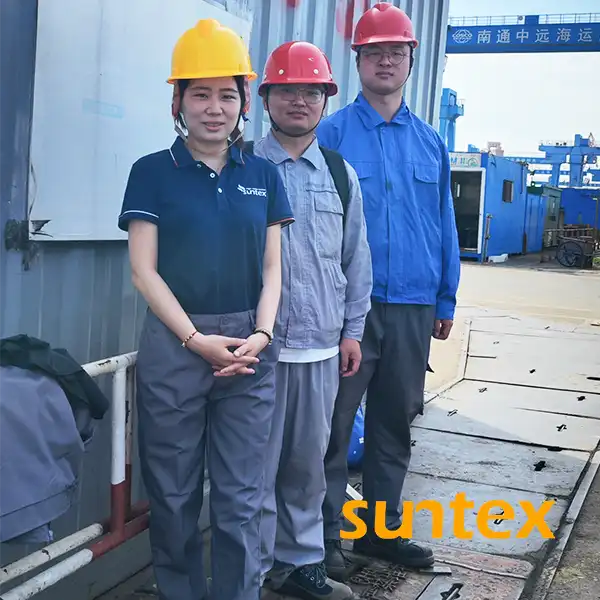
When Emma and her team stepped into COSCO’s shipyard, their task this time was to carry out a series of key measurements for the juice-transporting ship “Orange Sea”. The valves, pipes, and other parts of this ship need to be accurately measured to make various fitting insulation sleeves, such as valve insulation sleeves, pipe insulation sleeves, and heat exchanger insulation sleeves. The focus of the engineer team’s measurement this time is on various hot water pipelines in the CIP room and pipelines in the bottom cabin. In the process of working deep in the cabin, they found many scenarios where fiberglass fabrics need to be used, and these applications fully demonstrate the important value of fiberglass fabrics in the shipbuilding industry.
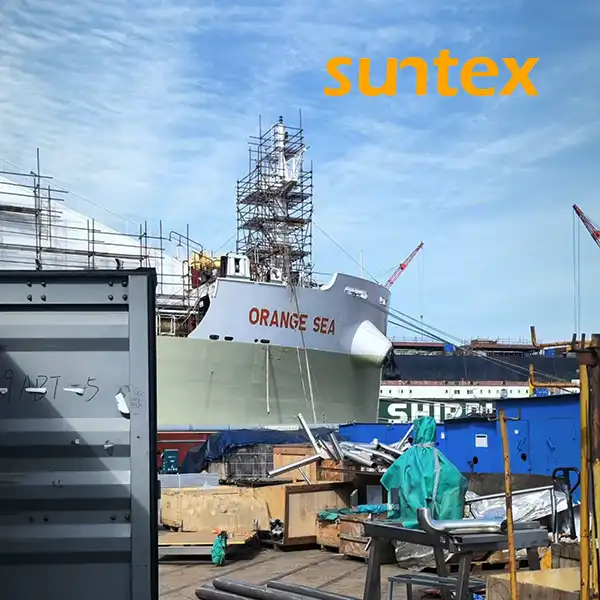
First of all, in terms of wall insulation in the cabin, fiberglass wool and aluminum fiberglass fabric play a key role. The interior space of the cabin needs to maintain a suitable temperature to ensure the storage conditions of goods and the living comfort of crew members. Fiberglass wool has excellent thermal insulation performance, which can effectively block the transfer of heat and reduce energy loss. On the basis of fiberglass wool, aluminum fiberglass fabric plays a further role in protection and enhancement. Aluminum foil has good reflective performance, which can reflect heat back and reduce heat absorption. At the same time, the fiberglass fabric provides certain strength and stability, making the entire insulation structure more firm and durable, and able to adapt to complex environmental conditions in the cabin, such as humidity changes and slight vibrations.
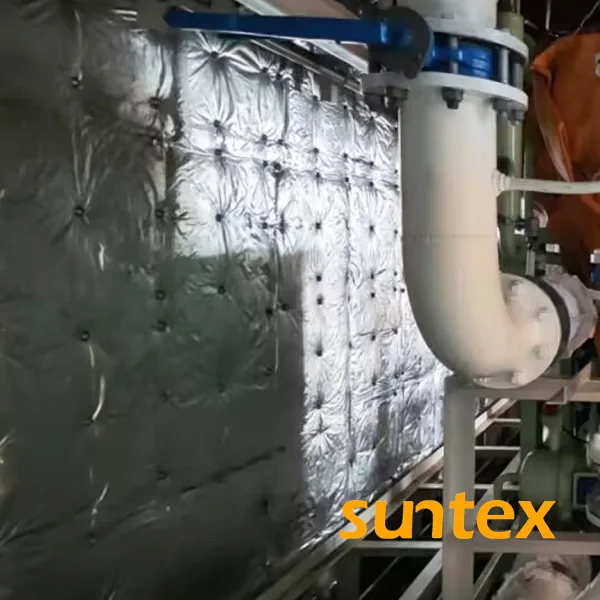
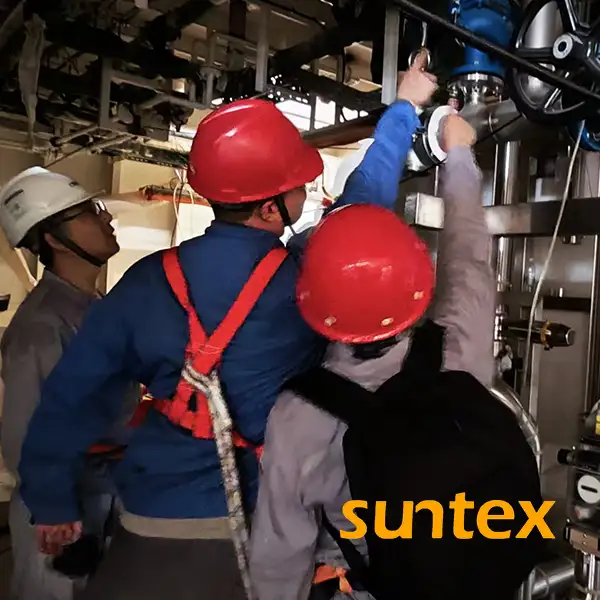
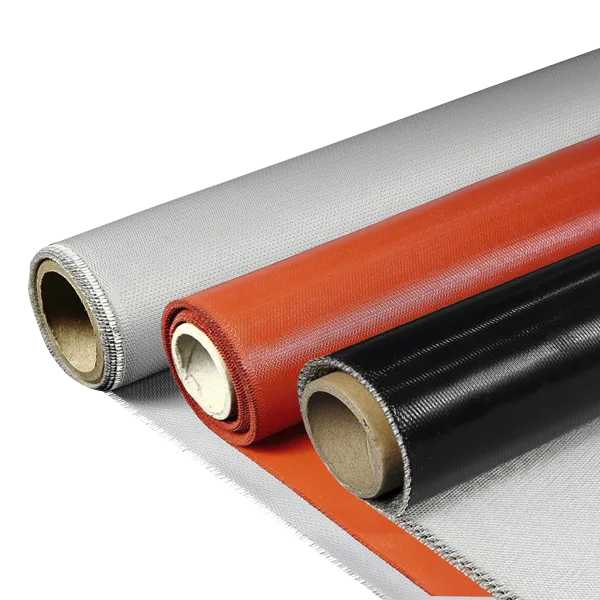
In the field of fireproof insulation for various pipelines, silicone fiberglass fabric and PTFE fiberglass fabric show their talents. The pipeline system on the ship is complex, transporting various media, and some pipelines transport flammable, explosive, or high temperature substances. Silicone fiberglass fabric has excellent high temperature resistance, can withstand high temperatures without deformation or damage, and the silicone coating on its surface also gives it good fireproof performance, effectively preventing the spread of fire. PTFE fiberglass fabric is famous for its excellent chemical stability and low friction coefficient. In some pipelines with high requirements for medium purity, PTFE fiberglass fabric can prevent the pipeline surface from adsorbing impurities, ensure the purity of the medium, and its fireproof performance also provides a reliable guarantee for the safe operation of the pipeline system. For example, on the pipelines transporting fuel oil, the use of these two fiberglass fabrics for fireproof insulation treatment can greatly reduce the risk of fire and ensure the safe navigation of the ship.
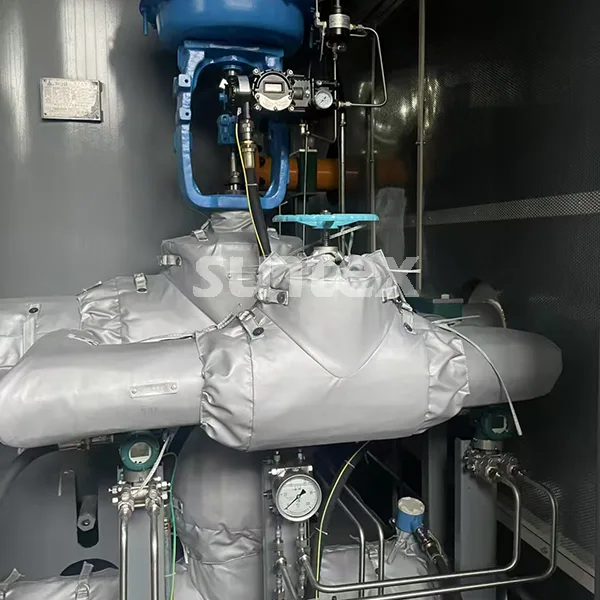
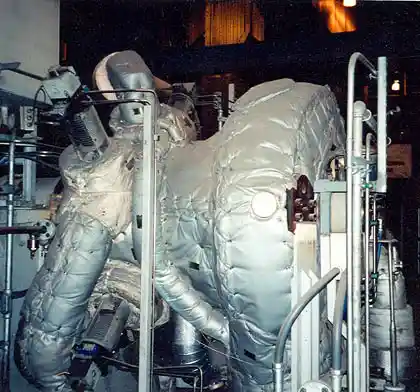
As one of the core equipment of the ship’s power system, the insulation work of the steam turbine is crucial. Silicone fiberglass fabric and high-temperature fiberglass fabric play an irreplaceable role in the insulation of the steam turbine. The steam turbine will generate a lot of heat during operation. If it cannot be effectively insulated, it will not only cause energy waste, but also may affect the normal operation of the steam turbine and the safety of surrounding equipment and personnel. With its good flexibility and high-temperature resistance, silicone fiberglass fabric can closely fit the complex surface of the steam turbine to form an effective heat insulation layer. High-temperature fiberglass fabric can withstand higher temperatures and still maintain stable performance under extreme working conditions, ensuring the long-term stable operation of the steam turbine in high-temperature environments. The synergistic effect of these two fiberglass fabrics provides a solid guarantee for the efficient operation of the steam turbine.
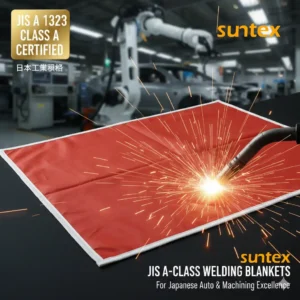
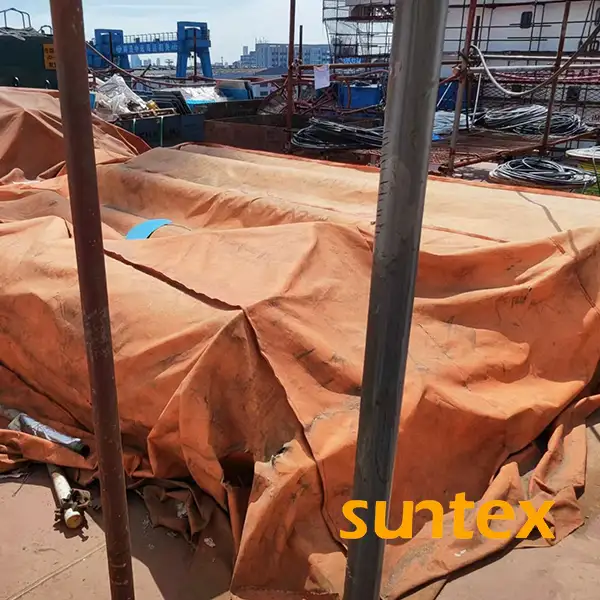
In the welding operation link of shipbuilding, the welding blanket is an essential protective product. Welding blankets are usually made of fiberglass fabric, which has excellent fireproof and heat-insulation performance. During the welding process, intense arc light and high-temperature welding slag will be generated. The electric welding blanket can effectively block these high-temperature substances from splashing into the surrounding environment, prevent the occurrence of fire, and also protect the surrounding equipment and personnel from high-temperature damage. Its soft texture and good coverage make it easy to lay around the welding area, providing reliable safety protection for welding operations.
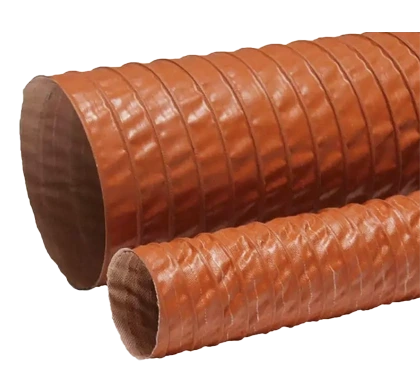
In addition, during the shipbuilding process, it is necessary to ensure good ventilation in each cabin, which is inseparable from ventilation hoses. These ventilation hoses need to have fire-proof performance and are usually made of silicone coated fiberglass fabric. During the navigation of the ship, the air circulation in the cabin is crucial to the health of personnel and the normal operation of equipment. In case of fire, the ventilation system may become a channel for the spread of fire. The ventilation hoses made of silicone coated fiberglass fabric can effectively prevent the spread of fire through the ventilation pipes in case of fire, buying valuable time for personnel evacuation and fire fighting work. At the same time, it also has certain flexibility and corrosion resistance, and can adapt to the ventilation needs of the ship in different environments.
With its diverse types and excellent performance, fiberglass fabrics play a pivotal role in all aspects of the shipbuilding industry. From the basic insulation of the cabin to the protection of key equipment, from fire safety protection to the construction of ventilation systems, fiberglass fabrics are widely used, providing a solid material foundation for building safe, efficient and durable ships. With the continuous development and progress of shipbuilding technology, it is believed that fiberglass fabrics will continue to show their unique charm in the future shipbuilding industry and make greater contributions to the development of the industry.
Other FAQ / Blogs / News >>